





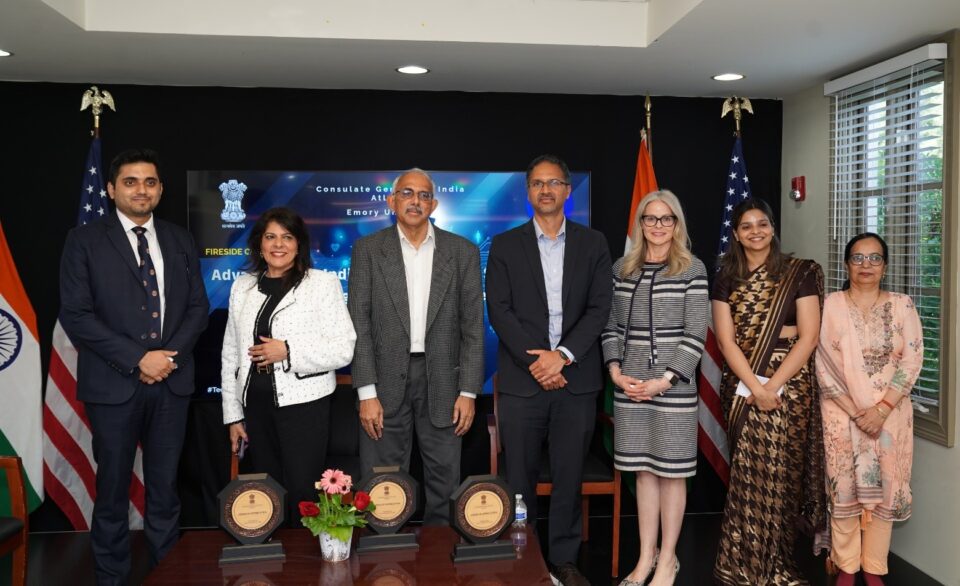
BY DR. ANANT MADABHUSHI*
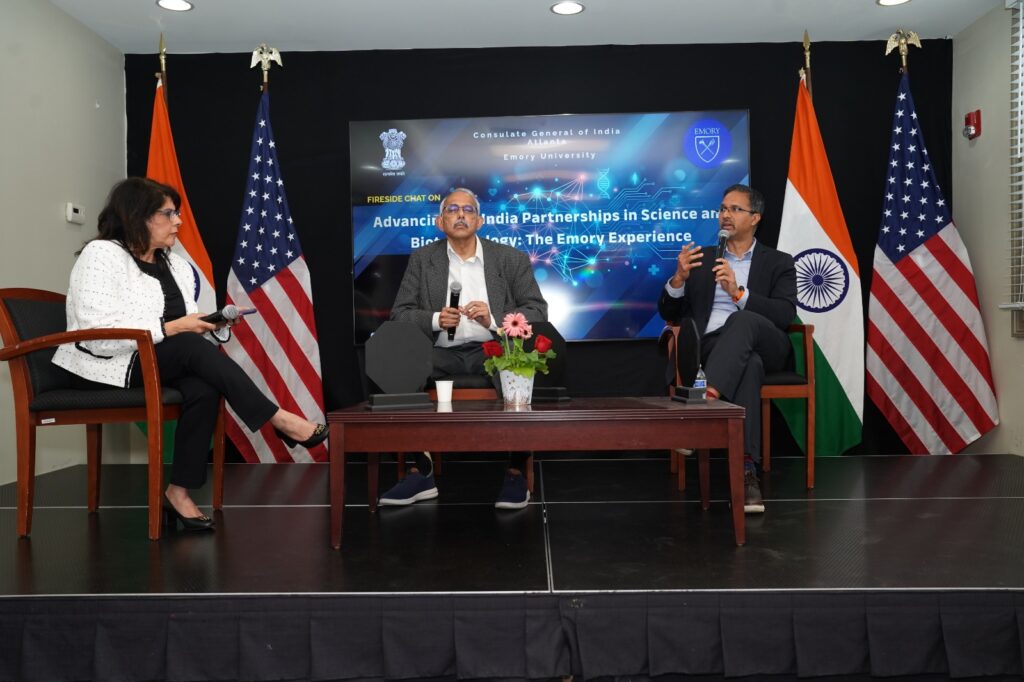
Atlanta, GA, May 4, 2026: On the evening of April 30th, I had the privilege of participating in a fireside chat at the Consulate General of India in Atlanta — an evening that left me inspired, energized, and newly convinced that some of the most important work in global health will be done not by a single institution, but through partnerships built on trust and sustained over time.
The event, focused on Emory University’s growing collaborations with India, was inaugurated by Consul General Ramesh Babu Lakshmanan, whose warmth and intellectual curiosity set exactly the right tone. The moderator was Nita Sardana, Chief Impact Officer of Innova Solutions, who navigated a wide-ranging conversation with exceptional grace and precision. Alongside me on stage was my dear friend and colleague Dr. Venkat Narayan, whose decades of partnership with India on diabetes research and global health represent a model for what deep, sustained collaboration looks like. Dr. Jane Gatewood of Emory opened with powerful remarks anchoring the breadth of Emory’s ongoing India engagement.

The conversation ranged across several themes that matter deeply to me — and I believe, to the Indian-American community.
Nine years with Tata Medical Center. Our research group has been working with the Tata Medical Center in Mumbai for nearly a decade on AI-driven digital pathology tools designed to identify women with breast cancer in India who may safely avoid chemotherapy. This work began with support from a joint U.S. Department of State and Department of Biotechnology program in 2017 and ultimately led to $6 million in National Cancer Institute funding in 2021. It is precisely the kind of science that only becomes possible through sustained India-U.S. collaboration — and it directly benefits Indian women who deserve the same precision of care as patients anywhere in the world.
Frugal AI is not a compromise — it is a necessity. One of the evening’s key themes was the importance of building AI diagnostic tools designed for the realities of low- and middle-income settings. India, with its vast and diverse patient populations and its remarkable density of scientific talent, is not merely a recipient of Western medical technology — it is a co-creator of better science. The constraints of resource-limited settings force innovation that ultimately benefits patients everywhere.
The bidirectional nature of the partnership. The knowledge transfer between the U.S. and India flows in both directions. India offers scale, biological diversity, and innovation under constraint that makes the science stronger for all of us. The lessons learned at Tata Medical Center or at a public hospital in Hyderabad inform the tools we build for patients in Atlanta.
A call to the diaspora. At a moment when federal funding for international research collaboration has been significantly curtailed, Dr. Narayan and I spoke directly to the South Asian community about the urgent need for philanthropic and private support. The Indian-American diaspora has built extraordinary wealth and institutional capacity in this country. The question is whether we will direct some of that capacity toward the work that connects us to India — and to patients everywhere who are still waiting for the benefits of precision medicine.
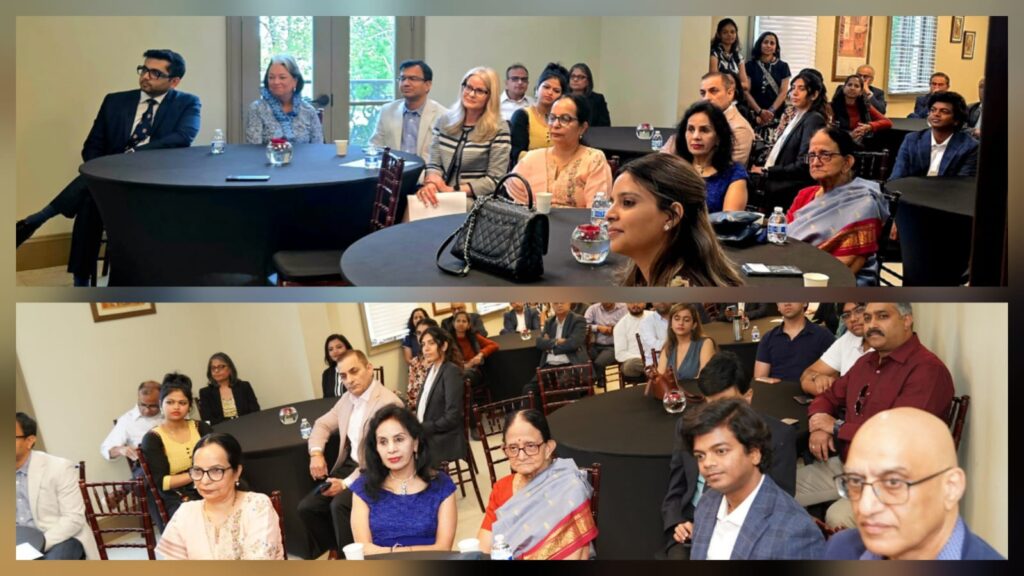
I left the Consulate that evening with a renewed sense of what is possible. The Indian-American community in Atlanta is home to scientists, physicians, entrepreneurs, and philanthropists who care deeply about both countries. Events like this one — convened by a Consul General who genuinely understands the stakes, moderated by a community leader of Nita Sardana’s caliber, and attended by people who showed up because they care — are the infrastructure of a partnership that matters.
India gave me my curiosity and my roots. America gave me the tools and the platform. And Atlanta — with Emory, Georgia Tech, the CDC, and a South Asian community of extraordinary depth — has given me the place to bring them together. I am grateful for all of it.
Dr. Anant Madabhushi is Robert W. Woodruff Professor of Biomedical Engineering at Emory University and Georgia Tech, and founding Director of the Emory Empathetic AI for Health Institute. A Fellow of the American Association for the Advancement of Science (AAAS), he is among the world’s most cited researchers in AI and medicine. His lab’s work spans cancer, cardiovascular disease, kidney disease, and global health, with active collaborations in India, Uganda, and Tanzania. He can be reached at anantm@emory.edu.
