





BY JYOTHSNA HEGDE*
There is a particular silence that follows the closing of a family home.
It is not only the silence of empty rooms. It is the silence of voices that once filled those rooms. The clatter of vessels in the kitchen. The shuffle of slippers across cool marble floors. The familiar call of “Have you eaten?” drifting from one room to another. When those sounds disappear, something within you understands that a chapter has ended.
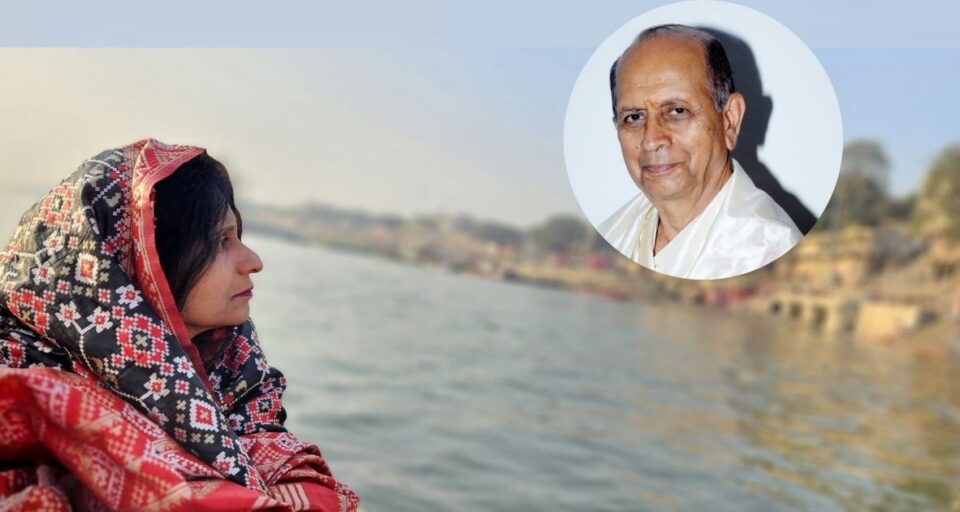
Two and a half years ago, I lost my mother. On January 21 this year, during my visit to Bangalore, I lost my father. With his passing, I did not just lose a parent. I lost the last doorway to my childhood.
Losing one parent is grief. Losing both is something far more elemental. It is the quiet, irreversible awareness that the two souls who knew you before the world did, are gone. The ones who remembered your first cry, your first fever, your stubborn streak, your small triumphs. Their absence rearranges you from within. You feel untethered, even if life around you continues as usual. You are still a daughter, but no longer someone’s child in the same way. You become the keeper of stories, the guardian of memory, the elder branch of your family tree.
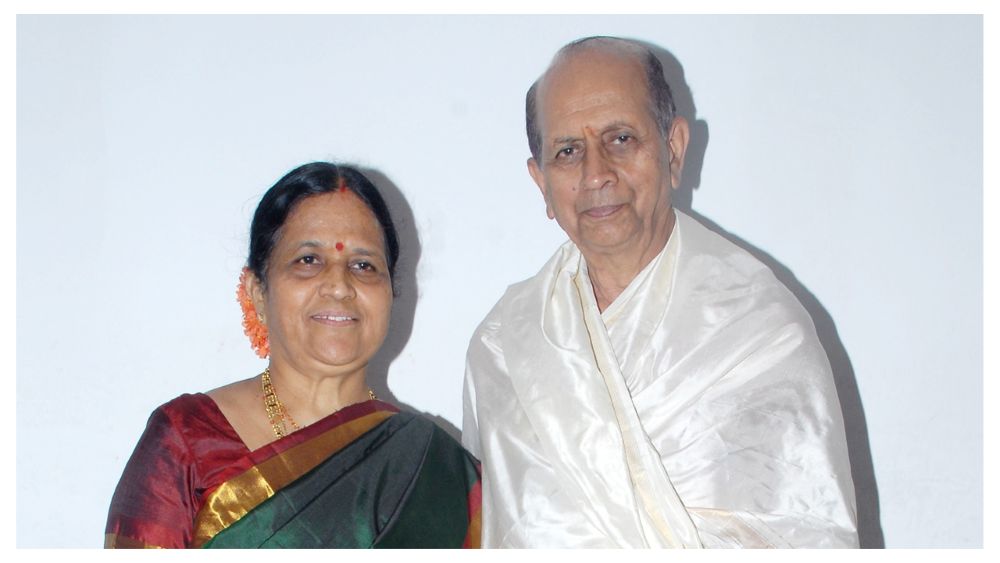
I moved to the US thirty years ago. I built a life here and am trying to raise our only daughter. Learned to belong. Yet my heart has always belonged to the Garden City Bangalore, Karnataka. To the house where my parents once waited eagerly at the airport for my arrival. In those early years they would stand scanning the crowd, eyes searching, faces lighting up when they spotted me. Later, when age slowed them, the driver would come instead, but they would be at home, alert and smiling, waiting for the sound of my suitcase wheels crossing the threshold.
This last visit, my father was still there.
My sister Rima, who lives in California, had arrived on January 4 to celebrate his eighty-eighth birthday the next day. The moment she entered the house, she sensed something was wrong. The man who would always stand at the doorway was seated, breath shallow, body diminished.
When she insisted he go to the hospital, he said he needed to do one thing first. He wanted to bathe and light a lamp before God to thank Him for her safe arrival. Gratitude before fear. Prayer before urgency. Even in weakness, his instinct was thanksgiving. He insisted, and he succeeded. Only afterward did his body surrender.
He was admitted immediately and remained in the hospital until January 21.
Later, we discovered the quiet tragedy that had unfolded. In November, when he had requested a refill of his diuretic medication, the medical store mistakenly delivered an antihistamine that looked identical. For weeks he had been taking the wrong medicine. Instead of releasing excess fluid, his body retained it. His legs swelled painfully. His heart strained. His lungs became infected. He endured the discomfort without complaint and mentioned nothing to the caretaker who visited weekly. He did not wish to inconvenience anyone.
When we learned of the error, indignation rose in us. He dissolved it with a single sentence.
“Kalaya Tasmayi Namaha.”
I bow to Time.
There are English phrases that echo that surrender. “Thy will be done.” “To everything there is a season.” Each carries the same humility before the vast rhythm of existence. A recognition that Time governs all, and that our task is not to control it, but to bow before it with grace.
He reminded us that the pharmacist had served faithfully for twenty-five years, even delivering medicines during festivals. He asked us to forgive him. He said it was his responsibility to know what entered his body. No one else was to blame.
That was my father.
He was wealthy by any worldly standard. There was gold, silver, property, abundance. Yet he lived with striking simplicity. No extravagance. No ostentation. No pride. I never once saw him angry. He smiled through prosperity and hardship alike. He accepted joy and disappointment in equal measure. He supported quietly, steadily, without ever drawing attention to himself.
In the hospital, he did not ask about assets or accounts. He asked only one question.
“Is the Tulasi plant watered?”
That was his measure of continuity. Not wealth, but nurture. Not inheritance, but care.
Visitors came in steady waves. With his swollen hands, he clasped theirs. He called each by name. He smiled and said, “Be happy.” Even at the edge of life, he was blessing others. He thanked my mother’s brother Ramesh and his wife Vidya for their unwavering support. He was deeply grateful to his beloved sister-in-law Vasi, who sat beside my sister and me every single day in the hospital. The day before he passed, she brought Theertha from different temples. He drank only that. The next morning he bathed. Before his beloved hot, strong filter coffee could be served, he slipped away peacefully.
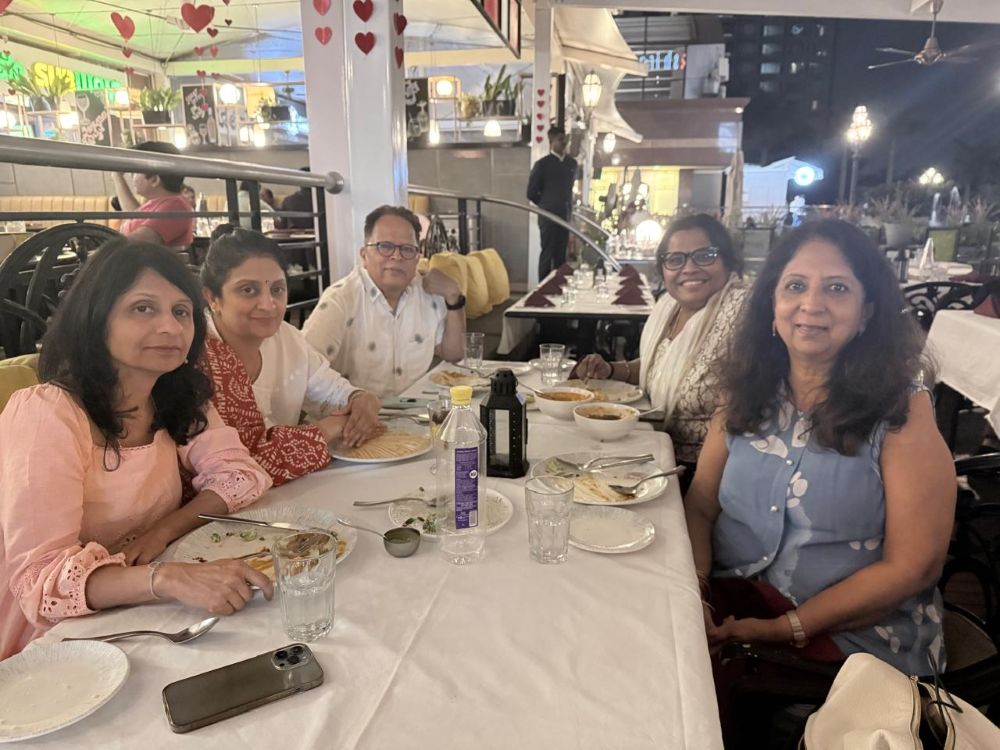
For the thirteenth-day rituals, my cousin Harshala flew in from Canada. She came not merely to perform a ritual, but to honor a bond. He had taught her first prayers. He had always blessed her generously. He had inspired her to anchor her life in spirituality. Her presence was a living testament to the quiet influence he carried far beyond the walls of his own home. His kindness had crossed oceans and settled into other hearts.
During those days of farewell, old friends like Raji came in, offering their presence and support in ways both quiet and meaningful. A cousin, Sukanya, who lives in the US but was visiting, offered to send us breakfast and lunch for the ritualistic days we are not supposed to cook in the house.
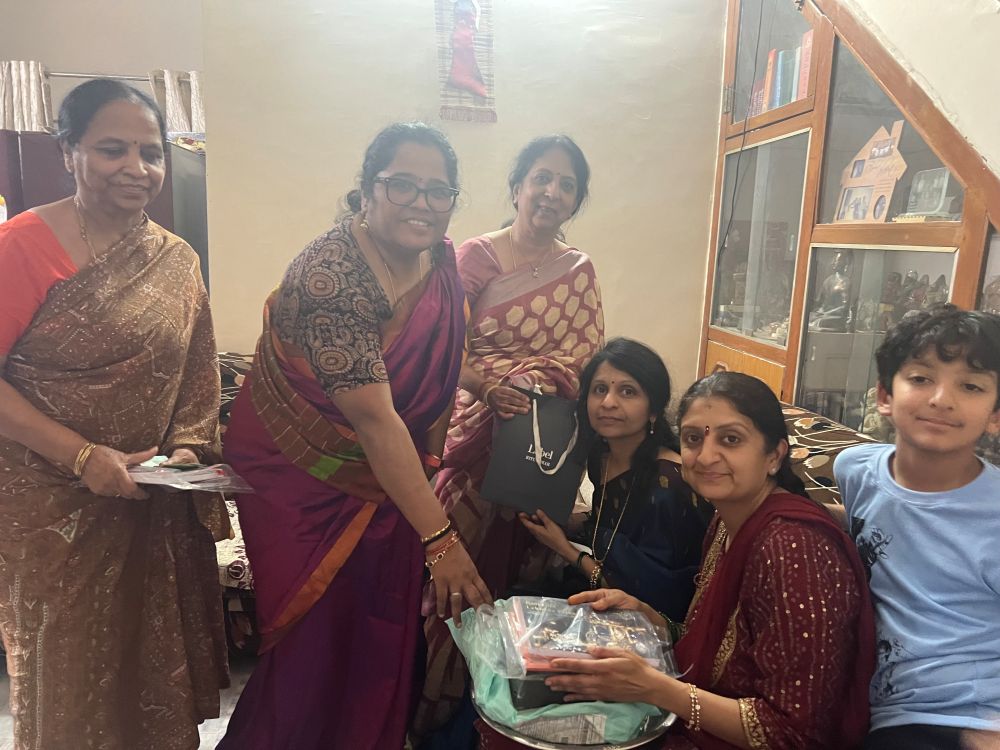
Vidya aunty, with a generosity that seemed to flow from her very being, offered to take my sister and I to all the temples my father had frequented throughout his life. She insisted on accompanying us, guiding us gently along unfamiliar roads as though retracing the sacred map of his devotion. Every shrine we visited held a memory of him, the folded hands, whispered prayers, and quiet obeisances that I now wished I had witnessed more closely.
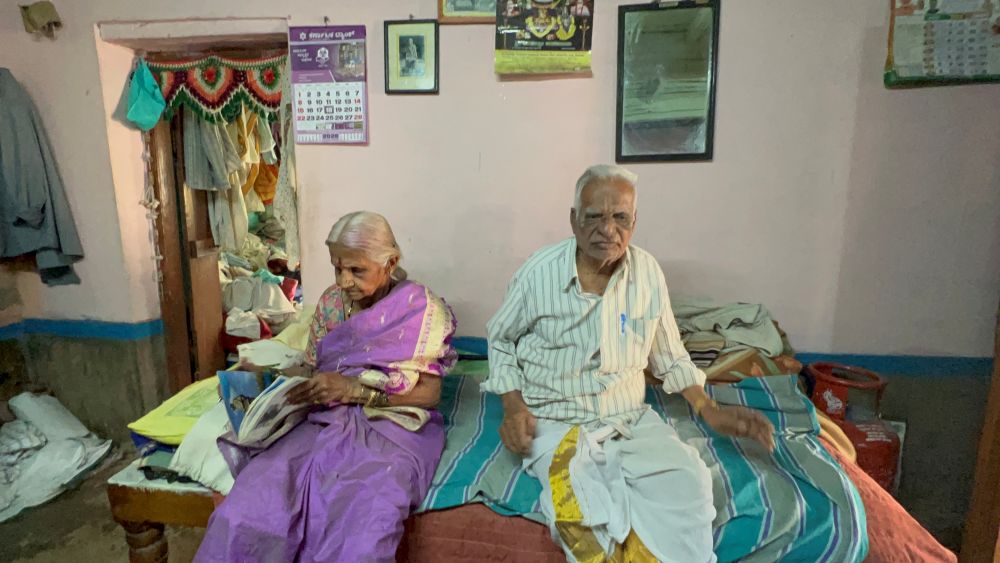
We then stopped by his birthplace Yeliyur, a village that seemed suspended in time. The earth itself seemed to hum with remembrance. There, I met an elderly couple who still remembered my family. Through their eyes, I saw my father not as the dignified elder I had known, but as the bright, curious boy who once ran through those narrow lanes, drank fresh goat’s milk in the mornings, and touched the earth with the same gentle hands he would carry into adulthood. She showed us the old temple where he had first learned to bow his head in prayer, offered us steaming coffee that carried the aroma of both hospitality and history, and even offered to cook a meal for us, her hands busy with care and intention. We politely declined, but she pressed fresh vegetables she had grown into our hands, extracting a promise that next time, we would stay long enough for her to cook for us. It felt less like travel and more like a homecoming, a reconnection with the soil and spirit that had shaped my father’s life.
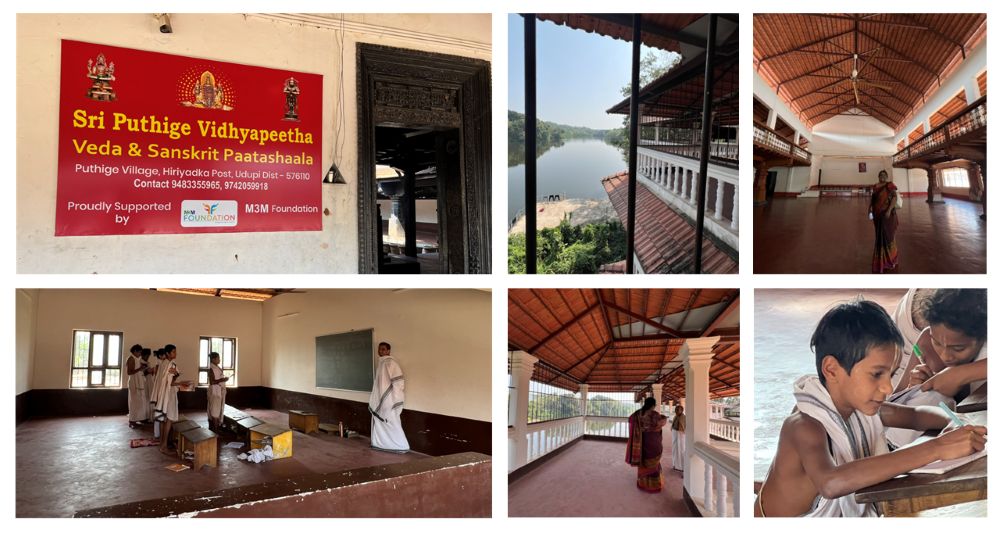
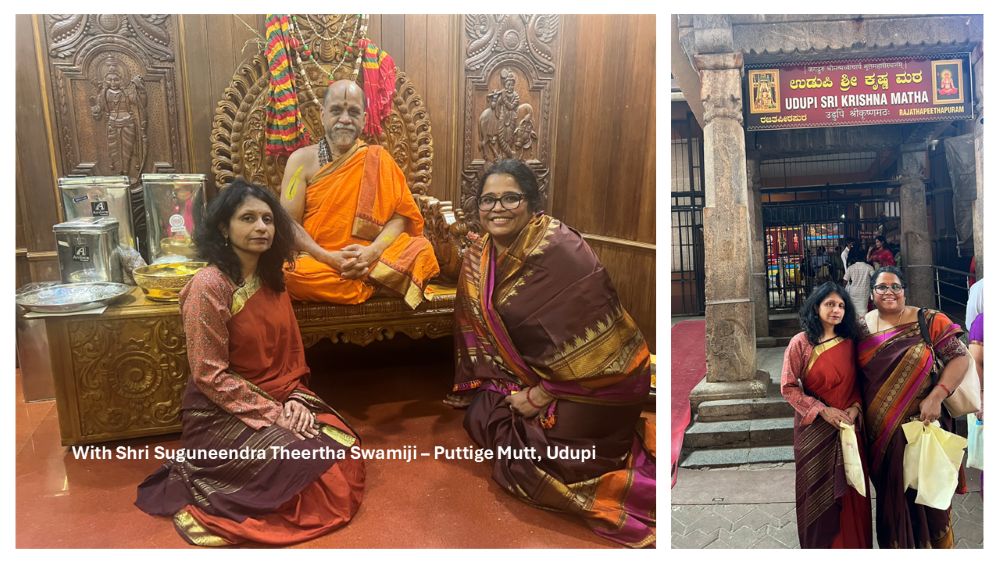
Later, I traveled with my cousin Harshala to Udupi, where we were welcomed with warmth and blessing by Shri Suguneendra Theertha Swamiji. In the serene presence of the Swamiji, I felt the quiet continuity of faith that had been the backbone of my father’s inner life—the devotion, the patience, the surrender. The chants, the fragrance of sandalwood, the ringing of temple bells seemed to soothe the raw ache of loss and anchor me, if only for a moment, in something enduring and sacred.
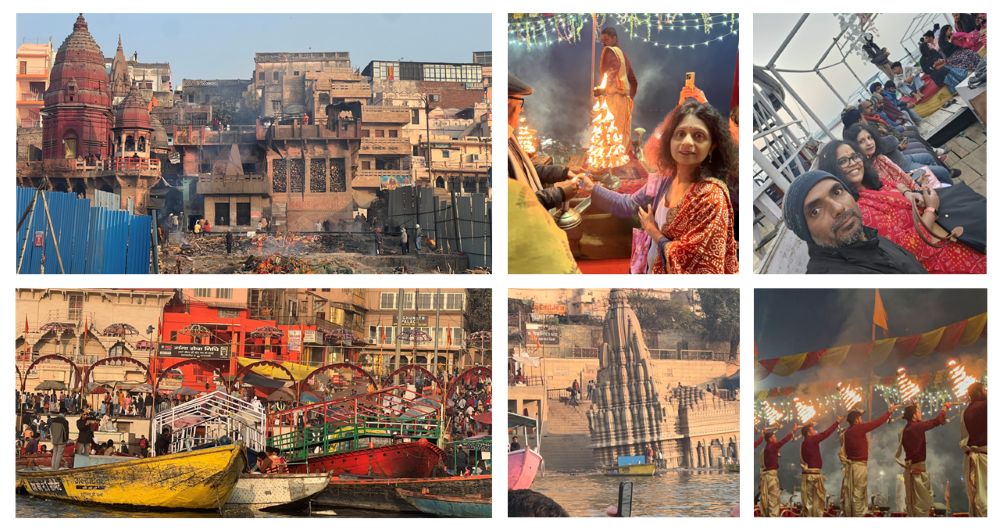
This journey of farewell took us across holy geographies. Our pilgrimage took us to Ayodhya, the cradle of devotion; Varanasi, India’s eternal city of death where endings are not feared but embraced as gateways to something greater; and Prayagraj, where the Ganga, Yamuna, and the mystical Saraswati converge in sacred confluence, each river retaining its essence even as they merge. At each place, I felt the rhythm of life, death, and devotion moving through us, as if the sacred geography itself was embracing my grief and offering solace. Standing at the confluence in Prayagraj, I sensed the symbolism of my father’s life: a steady, unassuming stream of simplicity, devotion, and love, merging with the currents of time, history, and faith, leaving traces of grace wherever he touched. These journeys, the temples, the rivers, and the rituals became more than pilgrimage, they became balm for the ache of loss, a quiet way for the soul to breathe, remember, and release.
After the rituals, condolences and travels, came the task I had been postponing in my heart. Closing the house.
My sister had arrived earlier than I had, and she had to leave earlier too, returning to her responsibilities in California. The days after the rituals slowly thinned out. Family members who had stood by us with unwavering strength now had urgent personal matters waiting for them. One by one, they left with hugs that lingered and reassurances that felt both comforting and hollow. And so the final, most difficult task remained – closing the house, and it remained with me.
I had dreaded that moment from the beginning. The thought of walking through each room alone, deciding what to keep, what to give away, what to seal into boxes, felt almost unbearable. Packing is practical work, but this was not merely packing. It was dismantling a lifetime. It was touching objects that still carried the warmth of my parents’ hands. I feared the weight of it. I feared the quiet.
But I was not alone for long.
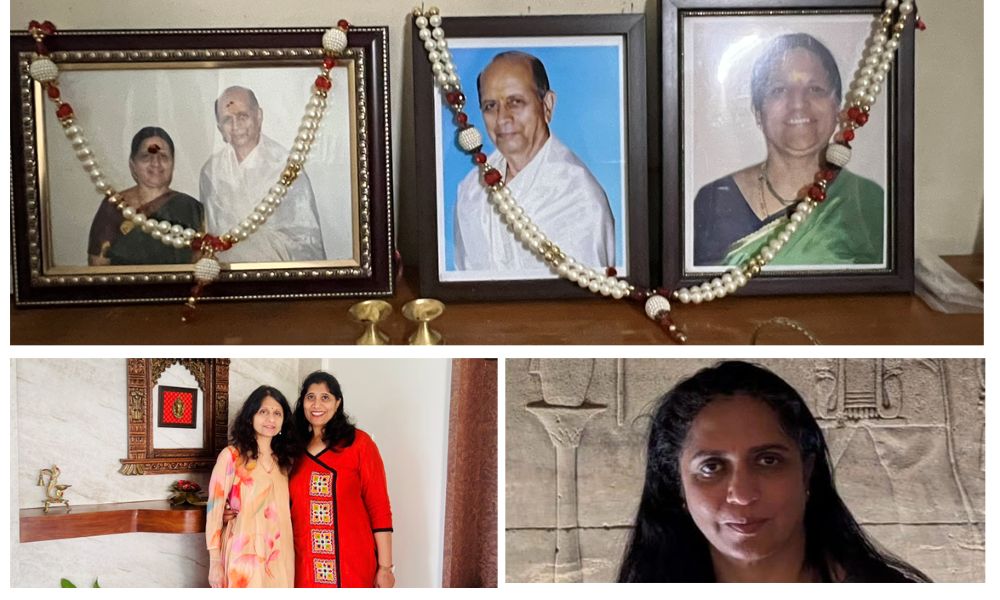
When the hour came and my resolve felt fragile, my childhood friends Pratibha and Sangeeta showed up. They did not arrive with grand speeches or dramatic gestures. They came with steady hands, and open hearts. What I had feared would be a solitary act of sorrow became, instead, a shared vigil of love. In that companionship, even the heaviest moments felt held.
With trembling hands, we began to pack. Sling-wrapping furniture that had witnessed decades of celebration and sorrow. Folding bedding that had absorbed childhood fevers, exam anxieties, whispered confidences. Wrapping kitchen utensils that had once been the heartbeat of our home.
The kitchen was my mother’s sanctuary. She believed food must always be served hot. Warmth was love expressed in tangible form. As I packed the vessels, I could almost hear her voice urging second helpings, insisting that everything be reheated and served fresh. I could see my father sitting quietly in the background, observing with his gentle smile.
My friends and I watched as packers wrapped plates in newspaper and memories in silence. The rustle of paper sounded louder than it should have, like the turning of fragile pages in a book we were not ready to close. We paused often, recalling festivals bright with lamps and laughter, monsoon evenings heavy with conversation, moments of despair that those walls had absorbed, and the quiet recoveries that followed. Every corner of that home seemed to breathe with remembrance.
Before we finally closed the doors, Sangeeta lovingly lit a lamp in front of my parents’ photographs and drew a rangoli at their feet. Its delicate patterns bloomed briefly against the cool floor, color against emptiness. We placed fresh garlands around their frames, our fingers trembling just enough to betray what we were trying to steady within ourselves. The small flame flickered in the stillness, as though keeping vigil over an era that had gently, irrevocably ended.
In that moment, something within us caved and expanded at the same time. It felt as though the house itself exhaled one last breath. The silence was no longer absence. It was presence of another kind, dense and sacred. We were not merely closing a door. We were witnessing the lowering of a curtain on a lifetime of love. My chest tightened with a grief so vast it felt oceanic, yet beneath it ran a quiet current of gratitude. To have belonged to such a home. To have been shaped by such parents. To have friends who stood steady as I said goodbye.
It is the next visit that I now fear.
We almost always landed in Bangalore at dawn. The house would already be awake. The aroma of freshly brewed filter coffee would greet us at the door. Upma would be tempering in the kitchen, mustard seeds crackling, curry leaves releasing their fragrance. The maid would be sweeping the floors while the sacred strains of Venkatesha Suprabhatam filled the air. There would be chatter, questions about the flight, gentle instructions to eat before resting.
Next time, there will be silence.
For those of us who leave India and build lives across oceans, this is the ache we carry. We pursue opportunity, believing we can hold two worlds at once. We promise ourselves we will return often. We measure distance in flight hours and reassure ourselves that there is time.
Time, however, bows to no one.
And yet, even as Time takes, it also gives.
While I was in Bangalore for my father’s final days and to close the house, I missed my daughter’s twelfth birthday in Atlanta. That absence weighed heavily on me. But love rose to meet it.
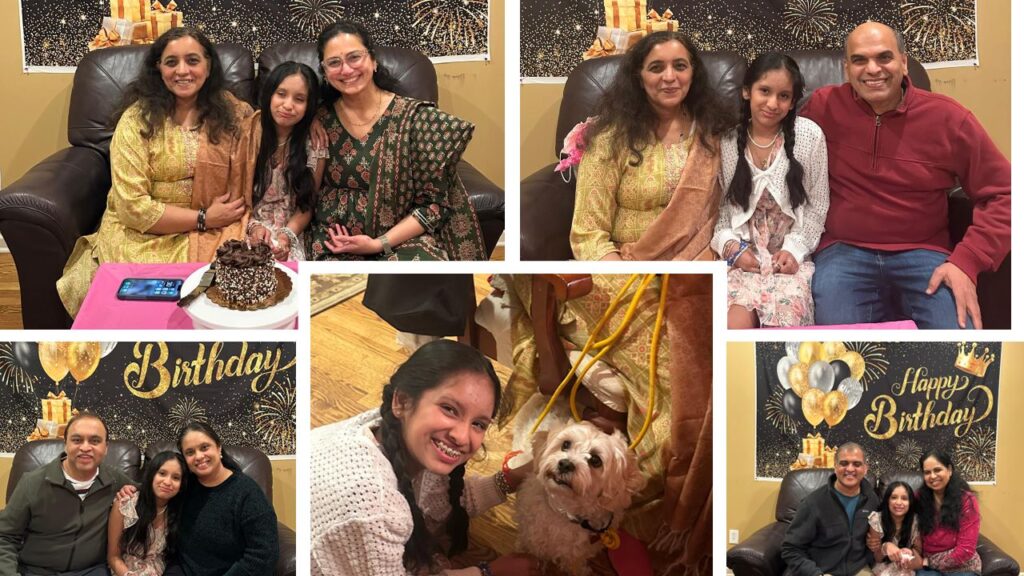
My friend Vani and her husband Balaji organized a celebration for her. Jayashree Ashwini, Hema Nagendra, Bala Nagu, and Shobha gathered around her, making sure she felt cherished. Another friend/neighbor, Hema, checked in at three in the morning when my daughter needed comfort. Veena reached out to my husband, offering help at any hour. I know many others would have come forward had I asked. Many other friends, Rekha, Dr. Bhat, & Patti constantly checked in. Rekha herself lost her dad on Jan 28, and flew into Bangalore. She was part the final Vaikunta Samaradhane rituals of my father.
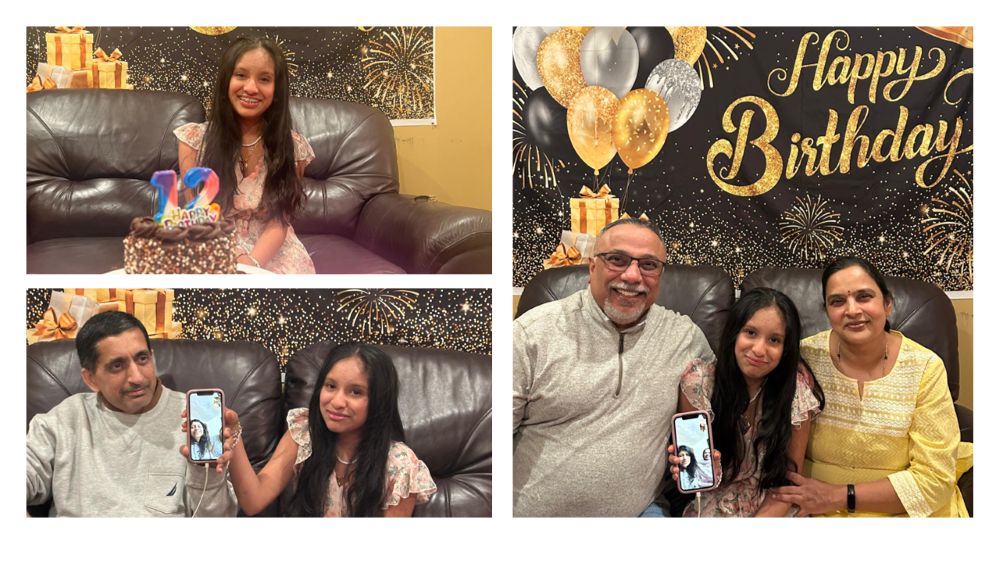
In one city, I was packing away my past. In another, my present was being held with tenderness.
This is the paradox of grief. My heart is shattered and sustained at the same time.
Kalaya Tasmayi Namaha.
I bow to Time that gave me parents who lived with dignity
and grace.
I bow to Time that allowed me to sit beside my father in his final days.
I bow to Time that took him gently, without bitterness.
I bow to Time that surrounded my child with love when I could not be there.
Losing both parents feels like the closing of a sacred book. But the lessons remain inscribed within us. Simplicity over display. Forgiveness over anger. Gratitude before complaint. A smile, even in pain.
My father lived that philosophy every day. He left the same way.
The house in Bangalore will no longer awaken at dawn for us. The Tulasi plant may stand quietly in the courtyard, no longer tended by my father’s careful hands. Yet we have asked the maid to water it every day until we return, as though that simple act could keep a thin silver thread of continuity alive. The coffee may brew for someone else. The doors may open to different footsteps.
But somewhere in that courtyard, under the same sky, the Tulasi will still receive water. And perhaps that, too, is a form of prayer.
And within me, the lamp he lit does not flicker in the wind of loss. It burns steadily, fed by memory, by gratitude, by the quiet strength my parents embodied. Grief rests in my heart like twilight, soft and unending, yet alongside it rises a deep and luminous fullness. I mourn what Time has taken, and I cherish what Time has given.
*Jyothsna Hegde is the City News Editor of NRI Pulse.
