





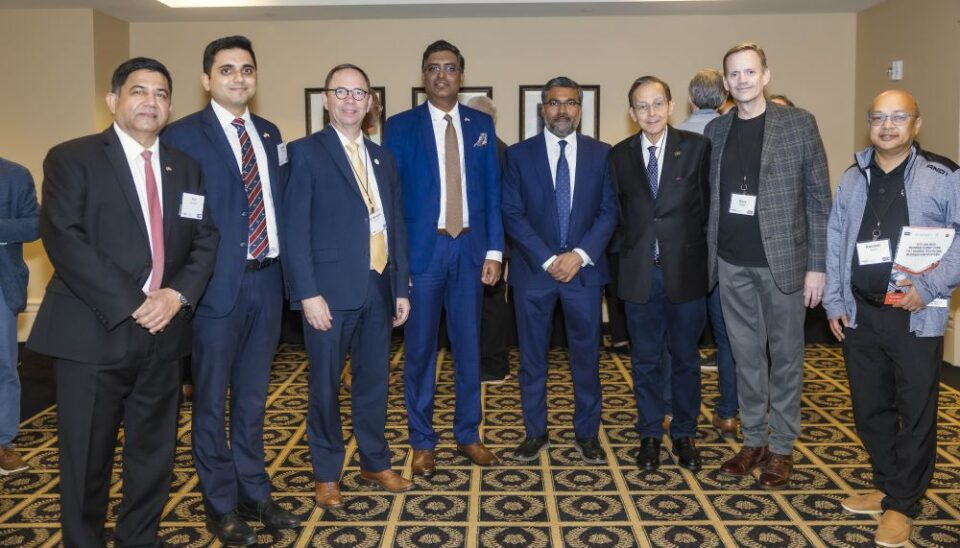
BY JYOTHSNA HEGDE
Atlanta, GA, December 17, 2025: For fifteen years, the USA India Business Summit (UIBS) has been a flagship platform driving U.S.–India business cooperation and shaping the direction of bilateral trade and technology policy. The 16th edition—hosted in partnership with the 31st Georgia Tech Global Business Forum—brought that influence into sharp focus as leaders gathered in Atlanta to examine how AI, defense technology, digital transformation, and workforce mobility will define the next phase of economic growth.
Setting the broader context, co-chairs Dr. John R. McIntyre, Professor and Executive Director at the Georgia Tech Center for International Business Education and Research, and Mr. Ani Agnihotri, Program Chair of UIBS and Managing Partner of USIBRC, highlighted the event’s strategic focus. Dr. McIntyre stated in his welcome address that in the strategic sphere, India is definitely the elephant in the world, dominating the normal stage. He emphasized that both countries must find solutions that not only address existing challenges but also harness emerging opportunities.
Mr. Agnihotri noted the global economic complexity influencing trade dialogues and remarked that the summit had to be staged “under the shadow of 50 percent tariff and lots of restrictions.” He acknowledged the role of sponsors including SAP, Palmetto Industries, and the Forsyth County Chamber.
Speaking on Georgia Tech’s influence on regional innovation and workforce development, Dr. Bernard Kippelen, Vice Provost for International Initiatives at Georgia Tech, stated, “I think the resilience and the energy it takes to bring the communities together and the partnership between the U.S. and India is very important.” He emphasized the university’s catalytic role in economic development.
Reflecting on this momentum, Hon. L. Ramesh Babu, Consul General of India in Atlanta, noted that institutions like Georgia Tech are playing a pivotal yet often unseen role—supplying talent and innovation that directly strengthen U.S.–India business corridors.
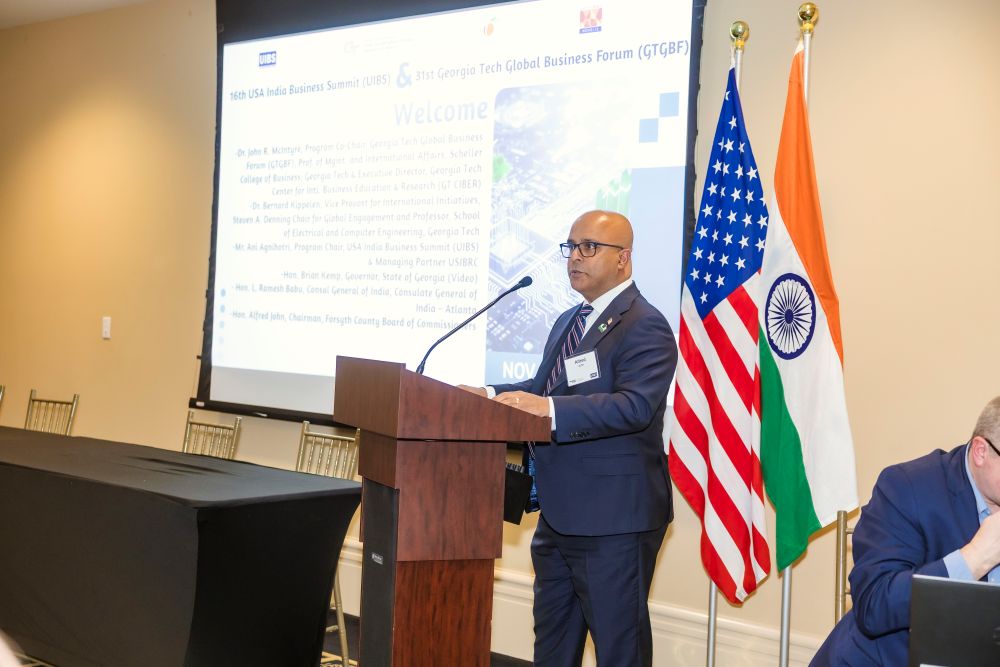
Hon. Alfred John, Chairman of the Forsyth County Board of Commissioners, highlighted regional transformation, describing Forsyth County as a “treasure trove of talent” for high-tech industries.
Day One focused on trade strategy, geopolitical collaboration, and the emerging defense-tech nexus.
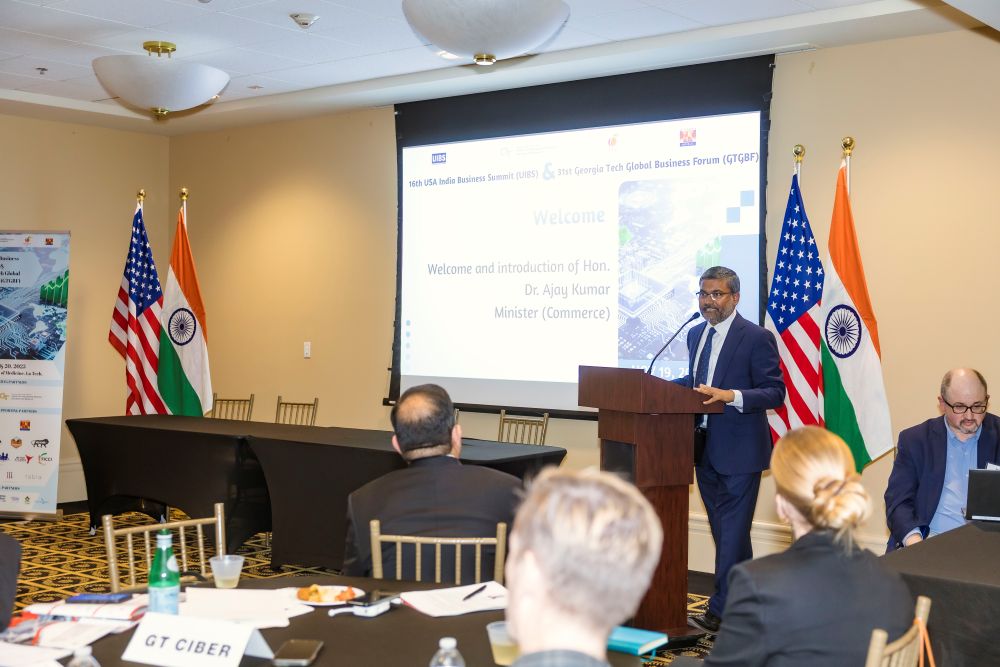
Hon. Dr. Ajay Kumar, Minister (Commerce) at the Embassy of India, delivered the Distinguished Speaker Address on “Business Relationship Between the USA and India: Challenges and Opportunities Ahead.” In his remarks, he reassured delegates that trade negotiations are progressing steadily, emphasizing, “Our negotiating teams are constantly in touch… I am very confident that in a couple of weeks’ time we should be past this entire situation.” He went on to outline the five major pillars of the India-U.S. Compact Initiative—trade, defense, energy security, technology, and people-to-people engagement—highlighting that all five pillars are witnessing “robust engagement,” reflecting the strength and resilience of the bilateral partnership.
The keynote addresses showcased high-level industry collaboration. Dr. Vivek Lall, Chief Executive of General Atomics Global Corporation, underscored that the question for nations is no longer whether to adopt AI but “whether they will shape the rules, guide responsible development, and build trusted frameworks.” He emphasized that a joint approach combining U.S. industrial experience and India’s “unmatched engineering strength” creates an opportunity “larger than any single broker.”
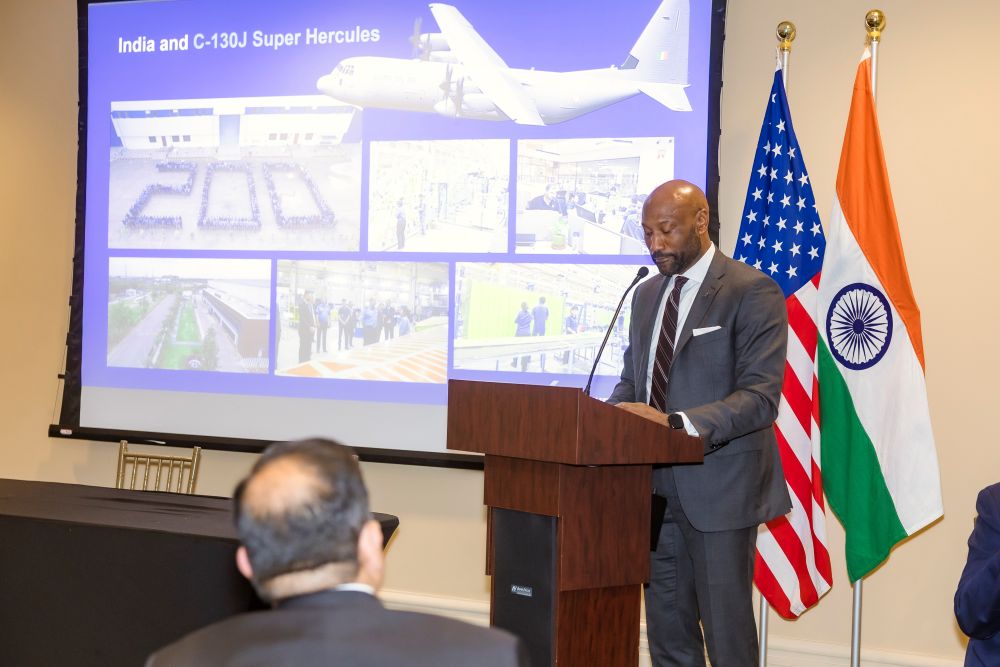
Mr. Roderick McLean, Vice President of Air Mobility and Maritime Missions at Lockheed Martin Aeronautics, described the U.S.-India partnership as “far more than a business relationship. It is one that is rooted, insured values, shared security objectives, shared innovation.” He highlighted active collaboration to build industrial ecosystems and strengthen regional stability.
Mr. Sabi Varma, Chief Strategy Officer at Honeywell, spoke on industrial digitalization, while Ms. Lauren O’Hearn, Regional Sales Manager at Georgia Ports Authority, emphasized how logistics infrastructure plays a vital enabling role in scaling bilateral trade.
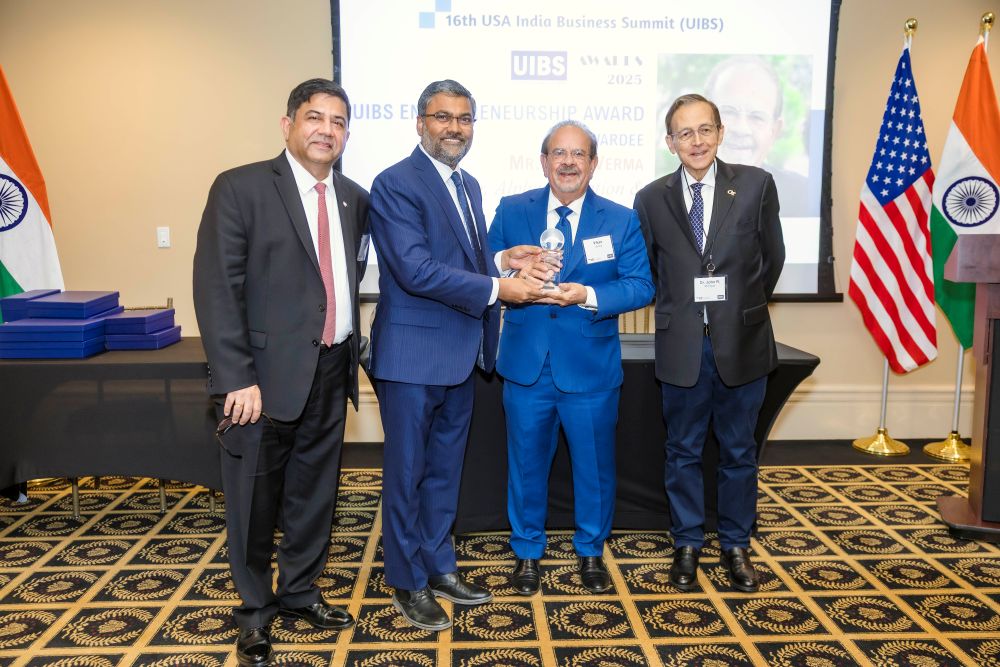
The UIBS Awards Ceremony recognized distinguished leaders shaping bilateral progress across diplomacy, academia, science, technology, and public service. Hon. L. Ramesh Babu received the UIBS Distinguished Services Award, and Hon. Alfred John received the UIBS Leadership Award. The USA and India Business Growth Award honored Dr. Vivek Lall, Mr. Roderick McLean, Ms. Lauren O’Hearn, and Mr. Shankar Balan, CEO of Palmetto Industries. Mr. Sabi Varma received the Business Excellence Award. Mr. Vikas Verma, Founder of Alpha Insulation & Waterproofing Co., received the UIBS Entrepreneurship Award. Dr. Rafi Ahmed, Director of the Emory Vaccine Center, was honored with the Distinguished Services Award for his contributions to vaccine science and cancer immunotherapy. The Friend of UIBS Award was presented to Dr. Bernard Kippelen, Ms. Jyothsna Hedge, journalist and IT consultant, and Ms. Yessica Jaimes, Business Development Manager at Wannamaker Crimmigration.
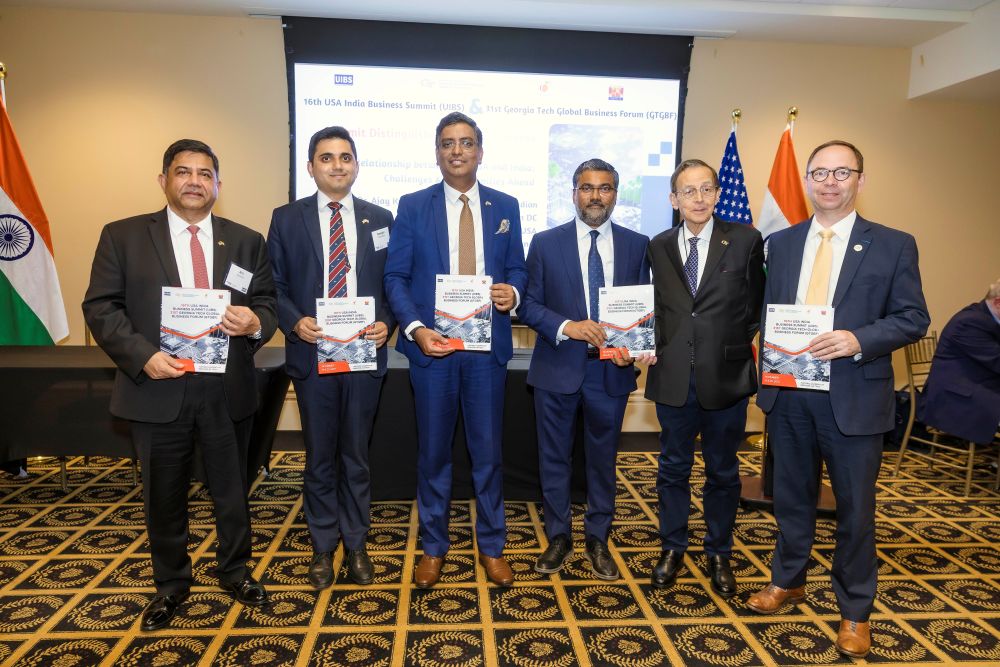
Day Two shifted the focus to AI adoption, digital workforce evolution, and transformation readiness. Opening remarks were delivered by Ms. Alice Carson, Deputy Commissioner of International Trade at the Georgia Department of Economic Development, and Mr. Alex Warner, Senior Vice President of the Forsyth County Chamber.
Deputy Consul General of India, Mr. Sreejan Shandilya, introduced the upcoming India–AI Impact Summit 2026, scheduled for February 19–20 in New Delhi. He explained that it will be the first-ever global AI summit hosted in the Global South and will move global AI efforts from aspiration to measurable action. He explained its vision, anchored on the Three Sutras: People, which promotes human-centered and ethical AI; Planet, which focuses on sustainable and climate-resilient AI; and Progress, which views AI as a driver of inclusive socio-economic growth.
The session on AI and workforce development brought compelling insights. Mr. Kaushik Datta, Senior Director of Human Resources at Mercedes-Benz USA, said, “If I do a word cloud on all the things that we have heard, you will see AI is like a very big word.” He raised a critical workforce challenge asking, “When these students are going to come with their agent to your workforce… do you know how to evaluate their agents?”
Dr. Brian Canada, Chair and Professor of Computational Science at the University of South Carolina Beaufort, explained the importance of trustworthy AI beyond prompt engineering. He introduced the concept of Context Engineering to ensure governance, reliability, and domain-specific control. He described three frameworks: Custom GPT models loaded with specific corporate documents such as Title IX policies, RAG systems that enable chat-based document access, and Model Context Protocol, describing it as allowing language models to “chat with APIs,” supporting transparency and compliance.
A thought-provoking discussion then challenged common perceptions of AI use. One speaker stated, “I argue that humans hallucinate more than AI… The biggest difference AI has a larger database.” Another added, “If I find something to do my job better, quicker, faster, increase my capacity, capability is that cheating? I encourage my students to use GPT.”
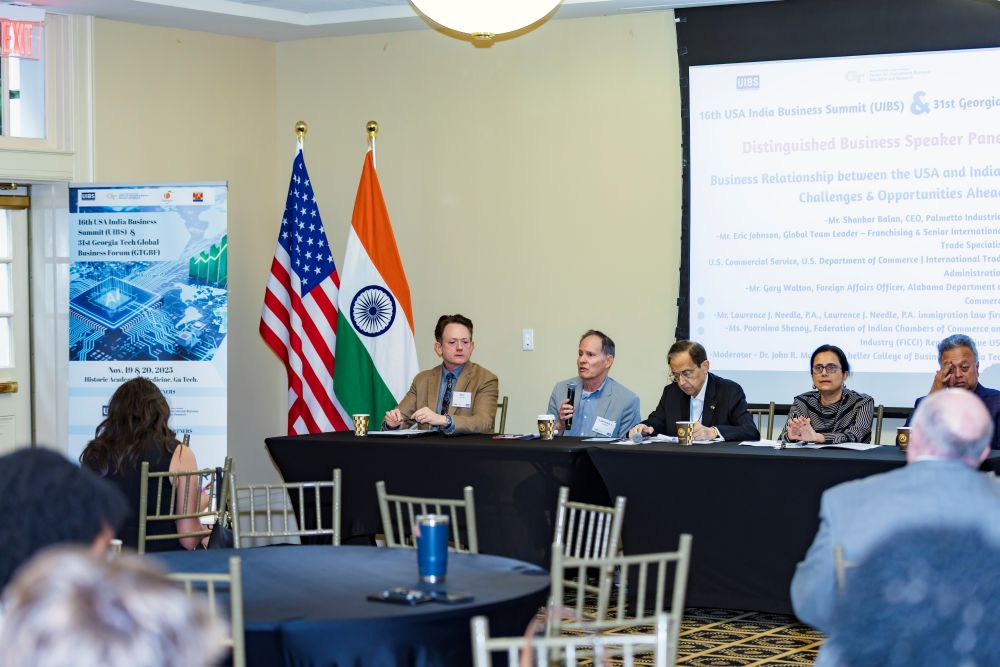
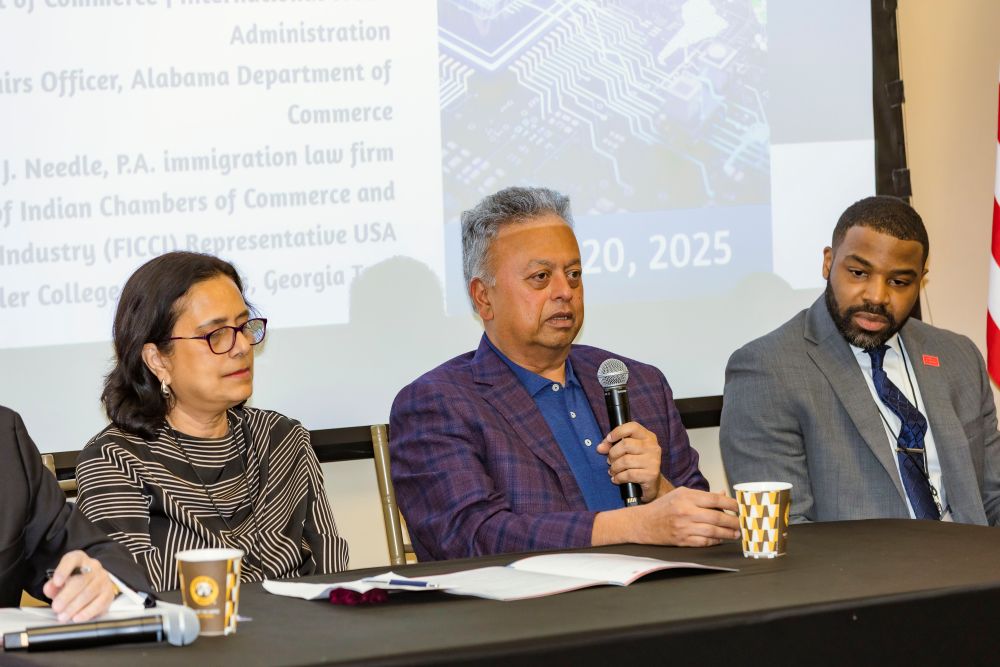
The discussion continued with Mr. Kent M. Reese Sr., Enterprise Architect at SAP, outlining how AI-driven platforms enable businesses to optimize value chains. Ms. Jennifer Chew of Bristlecone and Mr. Sorabh Singhal of WIPRO discussed how digitalization and data-driven strategy are now essential for competitiveness. Mr. Raymond Vickery Jr., Senior Advisor at CSIS, explained that while tariffs on Indian food products have been eased, high tariffs remain on gems, jewelry, and apparel. Ms. Anjali Kaur, Associate Director at CSIS, emphasized India’s demographic and technical strengths as critical assets in shaping the global digital future.
The final industrial session featured Dr. Kyle Saleeby of Georgia Tech and Ms. Jennifer Chew, demonstrating how AI is transforming manufacturing workflow, including predictive maintenance, robotics integration, and automated quality control.
In closing, Dr. McIntyre and Mr. Agnihotri highlighted India’s rapid economic ascent. They noted that India’s global economic share increased from 1.6 percent in 2000 to 3.4 percent in 2023, positioning it to become the world’s fourth-largest economy by early 2026. With a 400 million strong middle class and the third-largest startup ecosystem globally, the co-chairs delivered an optimistic call to action. They quoted Marcus Aurelius and reminded attendees to never let the future disturb you, stating that resilience has been central to India’s journey of transformation.
Discussions at the summit underscored the fact that U.S.-India partnership is entering a new era defined by shared technological leadership, robust economic engagement, and strategic collaboration. With AI, digital innovation, and advanced manufacturing at the forefront, both nations are positioned to co-create solutions that not only drive bilateral trade but also address global challenges. Anchored in mutual trust, a growing talent pipeline, and a commitment to responsible innovation, the partnership promises to be a model of 21st-century diplomacy and commerce—one where economic growth, technological advancement, and societal progress move hand in hand, shaping a resilient and prosperous future for both nations.
As the two-day summit wrapped up in Atlanta, one message stood out: UIBS has spent fifteen years shaping the trajectory of U.S.–India business cooperation, and its influence continues to grow. This year’s discussions underlined how AI adoption, digital infrastructure, and next-generation manufacturing will drive both countries toward the $500 billion trade goal. With a rapidly expanding talent base—powered in part by institutions like Georgia Tech—and a shared commitment to innovation, the U.S.–India partnership is entering its most dynamic phase yet. The summit closed with a clear takeaway: the path ahead will be defined by collaboration, strategy, and a joint resolve to turn technological possibilities into economic gains.
