


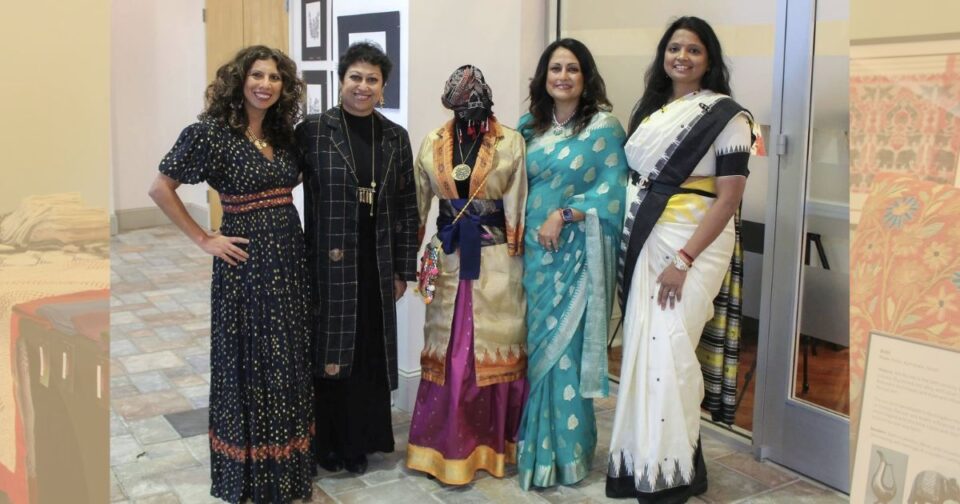
BY VEENA RAO
Duluth, GA, December 11, 2025: The Hudgens Center for Art & Learning became a vibrant space for artistic exchange and cultural reflection on Friday, November 1, as Untold India brought together visual art, performance, and storytelling in a one-of-a-kind cultural evening celebrating India’s lesser-known creative traditions.
Held from 5:00 to 8:30 p.m., the event highlighted the depth and diversity of India’s artistic heritage through curated art exhibits, a fireside panel with local artists, and a powerful Kathak–Flamenco jugalbandi by Anurag Sharma and Marianela Belloso. The Consul General of India in Atlanta, Ramesh Babu Lakshmanan, attended as Guest of Honor, underscoring the evening’s cultural and diplomatic significance.
Hosted by Neha Negandhi, Mitun Chaudhuri, and Malika Garrett, Untold India sought to spotlight artistic narratives that often remain “hidden in plain sight,” particularly those rooted in regional traditions, lived experience, and personal memory.
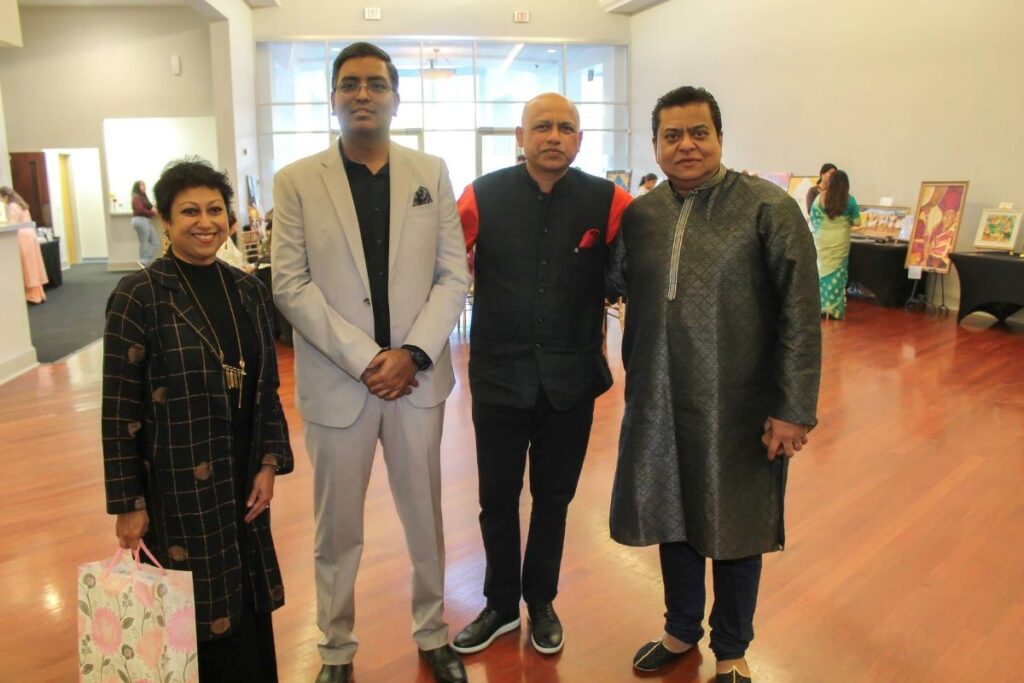
The program opened with remarks from Tarak Ghosh, Vice President of Global Operations at GHX (Global Healthcare Exchange), who served as emcee for the evening. Ghosh encouraged the audience to listen deeply and observe closely, describing Untold India as more than an art exhibition.
“While some Indian art forms—such as Madhubani or Pashmina—have gained global recognition,” he said, “many others continue to thrive quietly, their stories still waiting to be told.”
Artists on Heritage, Identity, and Creative Process
The panel discussion, moderated by Neha Negandhi—a public speaking coach and storytelling strategist—focused on how art preserves memory and builds emotional connection. “It’s the story that creates emotion,” Negandhi said. “And emotion is what stays with us.”
Niharika Singh, who traveled from Birmingham to participate, spoke about growing up across multiple Indian states as the daughter of an Indian Air Force officer. Frequent relocations exposed her to diverse regional cultures and folk art traditions, including village painting practices that use natural pigments from flowers and plants. Those early experiences, she said, continue to shape her artistic voice.
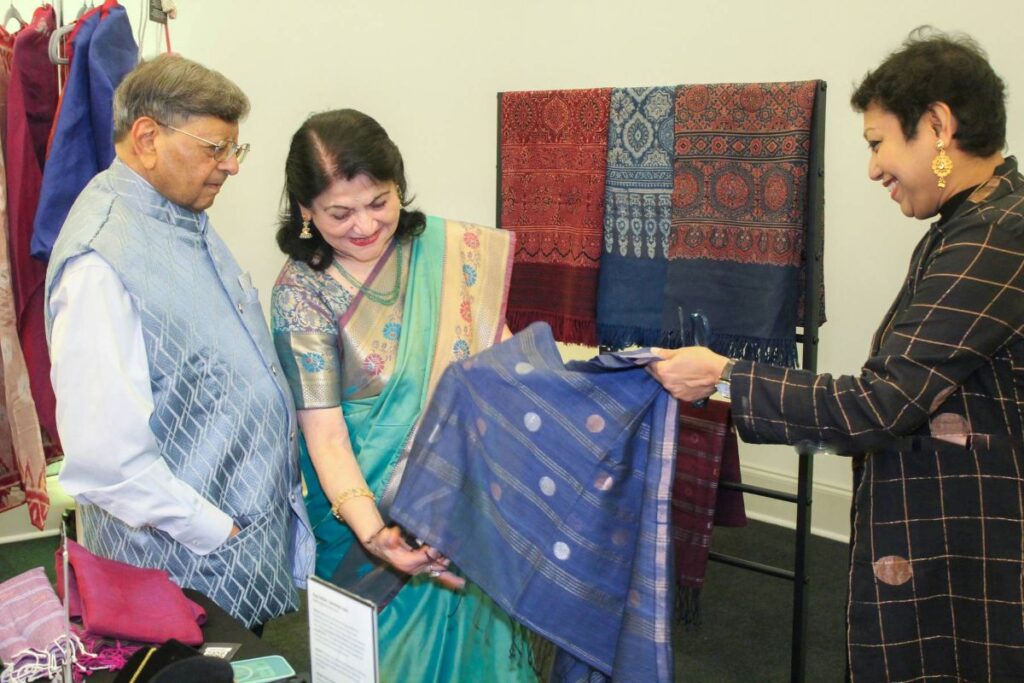
Mitun Chaudhuri, founder of the women-owned sustainable lifestyle brand Maka Maka, spoke about her work as a curator and social entrepreneur collaborating with artisans across India and abroad. She emphasized that Indian crafts are living traditions—deeply rooted in history yet constantly evolving. “Artisans are not just creators,” she said. “They are adapting tradition for today’s global audience.”
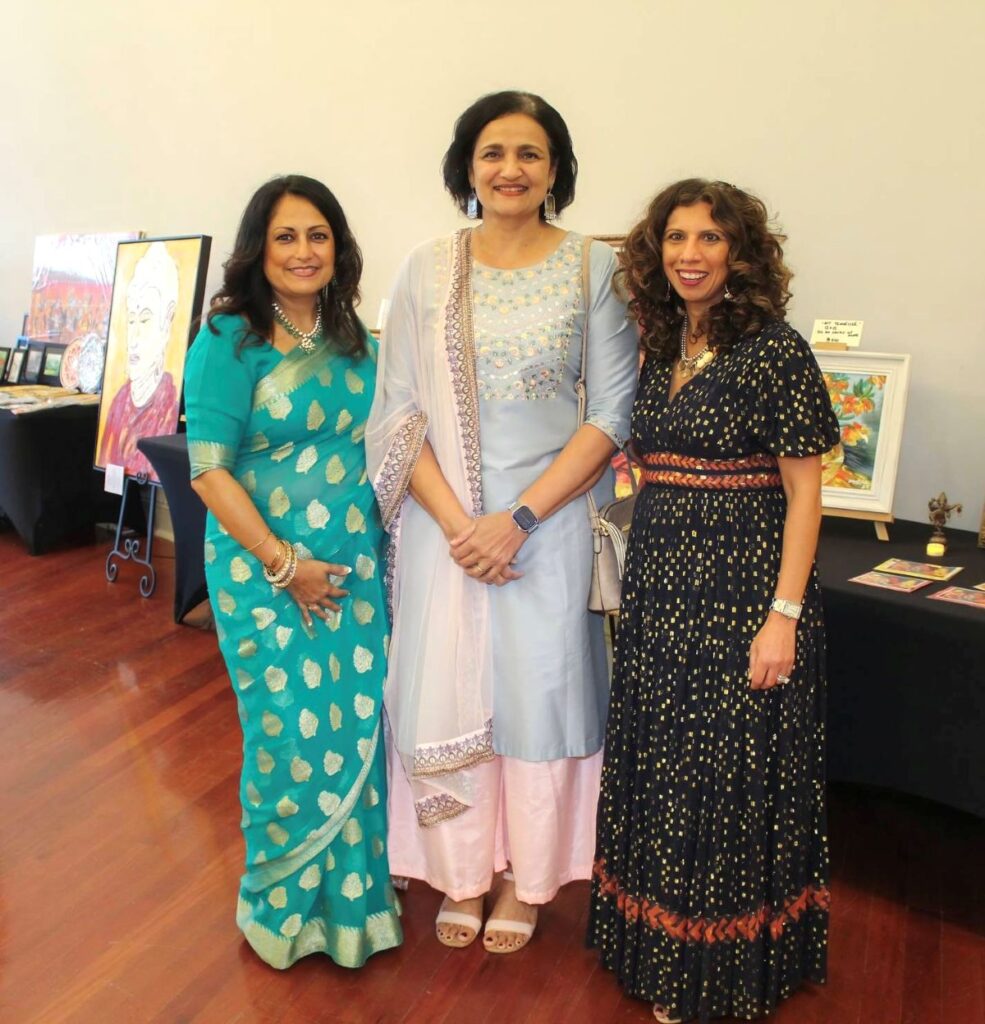
Atlanta-based artist Malika Garrett described her emotionally driven creative process, which often begins with photography captured during travel. Her paintings, created entirely with a palette knife, are intuitive and expressive. “I want my work to stir something personal in the viewer,” she said.
Sreepriya Subadhi, a full-time technologist who has returned seriously to painting within the past year, described art as a form of meditation and spiritual practice. Influenced by Hindu iconography, particularly imagery associated with Lord Shiva, her work blends ancient symbols with modern abstraction.
Asked what they hoped future generations might understand about their work, panelists returned to the idea of soul in art. With artificial intelligence increasingly shaping creative fields, speakers stressed that human-created art carries emotion, memory, and intention that technology cannot replace.
“Something of the artist remains in the work,” Chaudhuri said. “That essence cannot be replicated.”
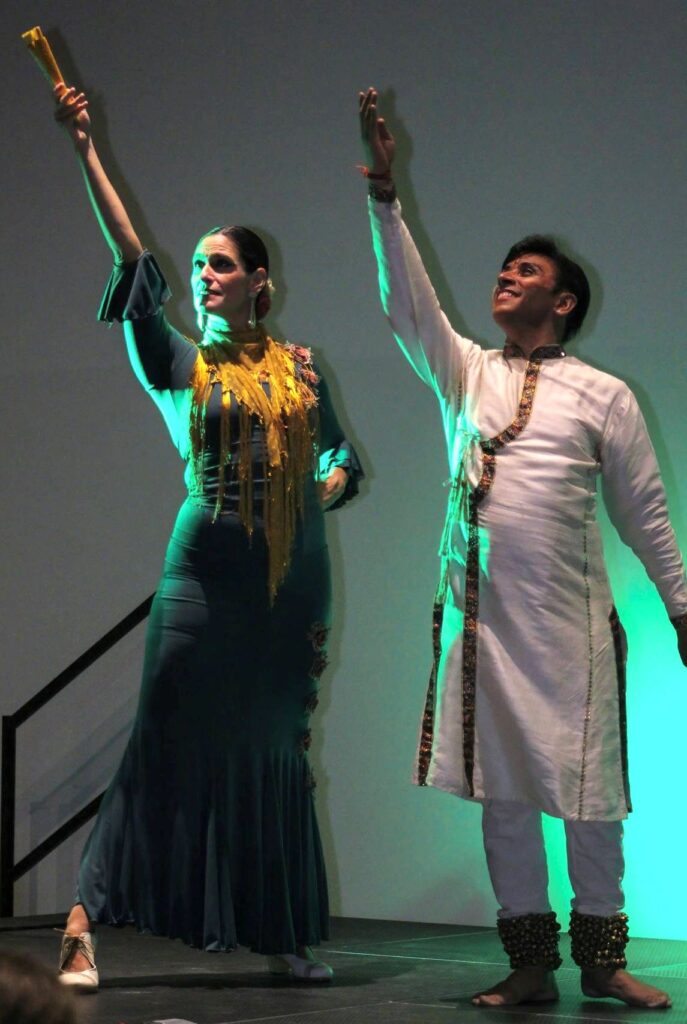
The Kathak-Flamenco Duet
One of the most striking moments of the evening was the Kathak–Flamenco duet, which revealed connections between the two classical dance forms. While Kathak originates in North India and Flamenco is closely associated with Spain, historians note that Flamenco was shaped in part by the Romani people, who trace their ancestral roots to the Indian subcontinent before migrating westward centuries ago.
Both Kathak and Flamenco rely on strong rhythmic footwork, rapid spins, expressive hand movements, and storytelling through movement. As Sharma and Belloso performed together, the shared rhythm between the two styles became unmistakable—sharp stamping, complex beats, and emotional intensity echoed across the stage.
The jugalbandi, or creative dialogue, offered a reminder that cultural connections often travel silently through history. Without words, the performance showed how rhythm and movement can bridge continents and centuries.
Giving Back
Proceeds from Untold India will benefit Spectrum Autism Support Group and Art Opportunity Knocks, aligning the cultural evening with a broader mission of community engagement.
The event was supported by the Sheth Family Foundation, KPPG, Jaipur Living, NaanStop, Trophy Point, Dora and Sanjay Singh, and Dr. Neelagaru and Sumithra.
Organizers described Untold India as an inaugural effort, born from conversations about art, identity, and what often goes unnoticed. As one panelist urged in closing, “Promote the arts in your communities. Tell these stories. That’s how they endure.”
