


BY VEENA RAO
Washington/New Delhi, February 7, 2026: The United States and India have agreed on a framework for an Interim Trade Agreement, marking a significant step toward a broader U.S.–India Bilateral Trade Agreement (BTA) aimed at expanding market access, easing trade barriers, and strengthening supply chains between the two countries.
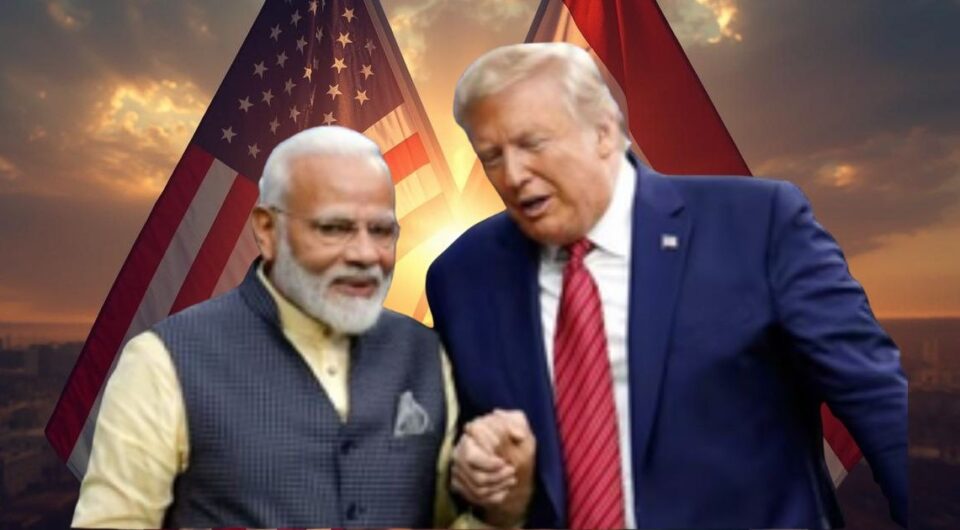
The framework, announced jointly by the two governments, builds on trade negotiations launched by U.S. President Donald Trump and Indian Prime Minister Narendra Modi on February 13, 2025, and is intended as a transitional arrangement ahead of a full trade pact.
Under the interim framework, India has agreed to eliminate or reduce tariffs on most U.S. industrial goods and a wide range of American food and agricultural products, including nuts, fruit, animal feed, soybean oil, wine and spirits. India has also committed to addressing long-standing non-tariff barriers, particularly in sectors such as U.S. medical devices, information and communication technology (ICT) products, and food and agriculture, which have previously limited American exports to the Indian market.
On the U.S. side, Washington will apply a reciprocal tariff of 18 percent on certain Indian goods, including textiles and apparel, leather and footwear, plastic and rubber products, organic chemicals, home décor items, artisanal products and some machinery. According to the joint statement, these tariffs are expected to be removed on a wide range of Indian exports—including generic pharmaceuticals, gems and diamonds, and aircraft parts—once the Interim Agreement is successfully concluded.
The framework also includes tariff relief and preferential treatment in sensitive sectors. The United States has agreed to remove certain tariffs on Indian aircraft and aircraft parts linked to national security measures on steel, aluminum and copper, while India is expected to receive preferential tariff-rate quotas for auto parts and negotiated outcomes for pharmaceuticals, subject to U.S. national security reviews.
Both countries agreed to establish rules of origin to ensure that the benefits of the agreement primarily flow to the U.S. and India, and to coordinate standards, testing requirements and conformity procedures to make compliance easier for exporters.
A major commercial component of the framework is India’s stated intention to purchase $500 billion worth of U.S. goods over the next five years, including energy products, aircraft and aircraft parts, precious metals, technology products and coking coal. The two sides also plan to expand cooperation in advanced technologies, including data-center equipment and graphics processing units (GPUs), and to strengthen coordination on investment reviews and export controls.
In a post on X, Prime Minister Narendra Modi welcomed the agreement, calling it “great news for India and USA,” and said the framework reflects the growing depth and trust in the bilateral relationship. Modi said the deal would strengthen the “Make in India” initiative by opening new opportunities for farmers, entrepreneurs, MSMEs, startups and fishermen, while generating employment for women and young people. He also emphasized deeper technology partnerships, resilient supply chains and global growth.
India’s Commerce Minister Piyush Goyal said the framework would open a “$30 trillion market” for Indian exporters and create “lakhs of new job opportunities.” Goyal highlighted tariff reductions and exemptions for Indian goods, while also stressing that India’s sensitive agricultural and dairy sectors would remain fully protected, including products such as wheat, rice, maize, milk, poultry and meat.
The joint statement, however, frames the agreement as a phased and conditional process, noting that tariff reductions and market access commitments depend on the successful conclusion of the Interim Agreement and continued negotiations toward the full Bilateral Trade Agreement. It also allows either side to adjust commitments if agreed-upon tariffs are changed in the future.
Officials from both countries said the framework is designed to be implemented promptly, with the goal of finalizing the Interim Agreement and advancing toward a comprehensive U.S.–India trade pact that balances economic growth, national security concerns and long-standing trade sensitivities.
