


BY NAMITA DOGRA SUDAN*
The melody that defined the heartbeat of Indian cinema for over eight decades has fallen silent. Asha Bhosle, the legendary playback singer and “Queen of Melody,” passed away today, Sunday, April 12, 2026, at Mumbai’s Breach Candy Hospital. She was 92. Her son, Anand Bhosle, confirmed that she died of multi-organ failure following a cardiac arrest after being admitted a day earlier with a chest infection and exhaustion.
To the world, she was the Guinness World Record holder for the most recorded artist in music history. But to those invited into her inner circle, she was “Taayi”—a woman of immense warmth who treated a fan like family.
A Temple in a Three-Bedroom Apartment
I first entered her Mumbai home, Prabhu Kunj, in 2011. I expected a palace; I found a temple. There was no “diva” aura. The woman who had sung over 12,000 songs walked out in a simple house maxi, no makeup, looking like our own mothers on a quiet afternoon.
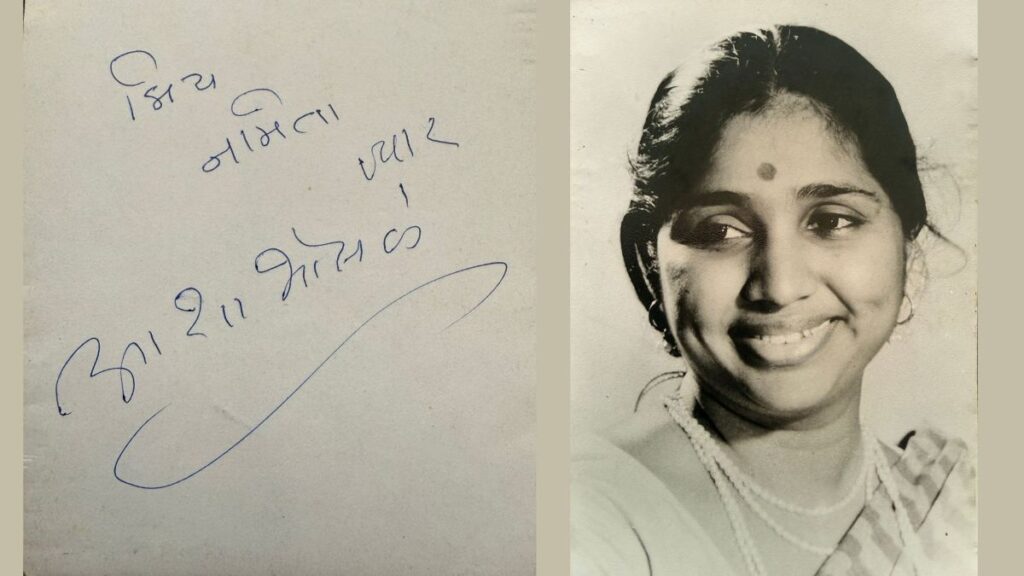
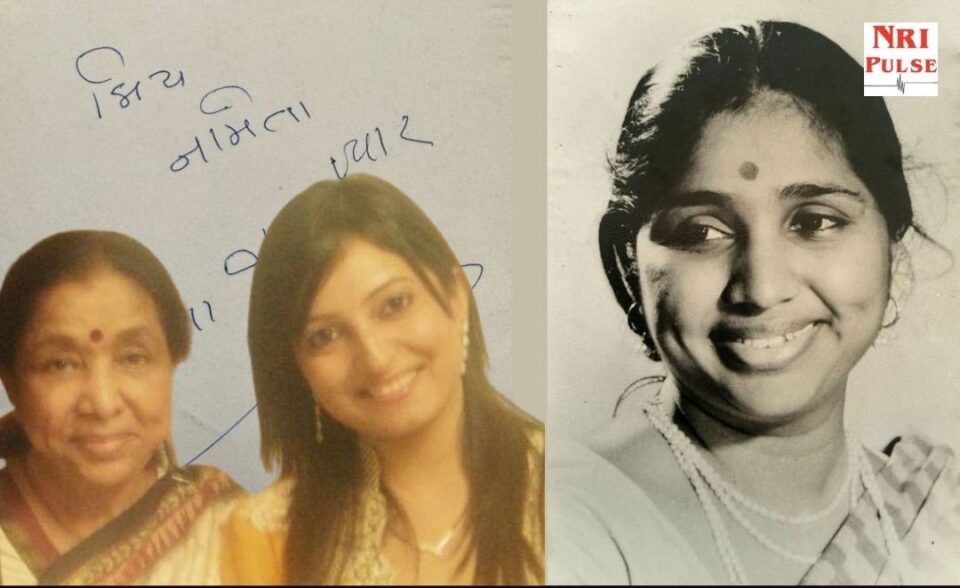
As we sat on her balcony jhoola overlooking a busy road, the noise was deafening. When I asked if it disturbed her, she gave an answer that revealed her deep humanity: “It gives me company,” she said. “I don’t feel alone.” When I asked for a selfie, she humbly refused because she “wasn’t looking good,” gifting me instead a favorite autographed photo—my first prized possession.
A Motherly Surprise: The Gift of a Saree
Months later, I returned to Prabhu Kunj with my husband. Taayi was known to be private, rarely allowing male strangers into her home, but she made an exception for us. When she realized I had married since our last meeting, she was genuinely surprised. “You got married and didn’t even invite me?” she teased.
In a gesture that felt more like a grandmother than a global icon, she went into her bedroom and brought out a beautiful saree. She gifted it to me as a blessing for my new life. It remains my second most prized possession—a piece of her elegance that I will carry forever.
The “Didi” and “Taayi” Bond
During a day spent together in Delhi—a day of saree shopping and hours of storytelling in her car—I began singing “Logon Na Maaro Isse.” She turned to me with a twinkle in her eye and asked, “Ye Didi ka gaana hai?” (Is this Didi’s—Lata Mangeshkar’s—song?)
When I laughed and told her it was her own, she chuckled, “I’ve sung so many, I sometimes forget which are mine and which are Didi’s.” It was a glimpse into the humble reality of the Mangeshkar sisters; the lines of ownership blurred into a singular family legacy.
The Day I Cooked for a Legend: Two Days in Atlanta
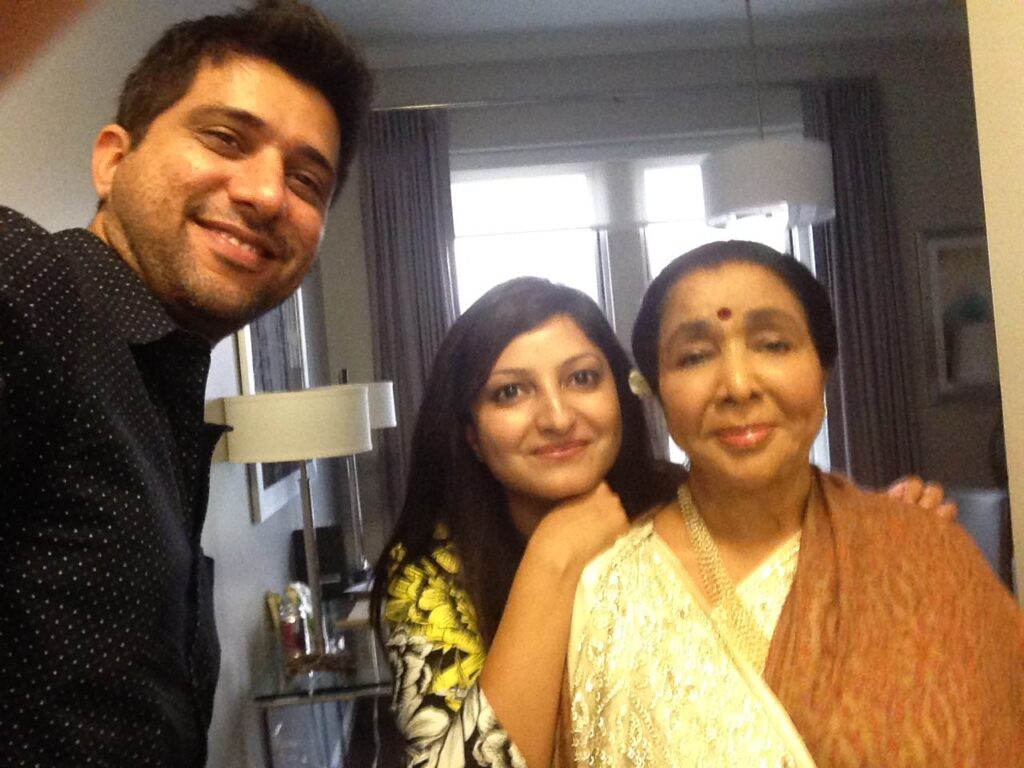
In 2015, the world saw her command the stage at the Fox Theatre in Atlanta. But for two back-to-back days across the street at The Georgian Terrace, I saw the woman behind the voice.
“You should have brought some food,” she had teased during our first meeting there. I didn’t come empty-handed the next day. I cooked for her, and we sat together in that hotel suite—a legendary singer and her friend—sharing a simple meal that meant more than any five-star banquet.
But her greatness was her empathy. At a time when I was struggling with my work visa in the U.S., she didn’t just offer advice; she offered a home. “I’ll give you a place to live,” she promised. “Come to Mumbai, and you can become a TV star.” She wasn’t just offering a career path; she was offering a safety net. In that moment, her belief in me was the exact support I had been searching for from friends and family. She became my anchor.
On the day of the concert, as she was getting ready for her performance, I looked out the hotel window. Below, massive lines of people were already snaking around the theater, vibrating with the anticipation of seeing a goddess of music. I turned back toward the quiet of the room and realized my own incredible luck: the legend was right there, getting ready all by herself.
In that moment, she wasn’t the “Iconic Asha Bhosle”; she was a performer fretting over the small, human things. “I forgot my pearl jewelry,” she complained to me with a sigh, “now what should I do?” It was so relatable, so strikingly normal. While thousands waited for the icon, I was lucky enough to be with the woman who just wanted her pearls.

A Life of Triumph and Tragedy
Behind the hundreds of awards, including the Dadasaheb Phalke Award (2000) and the Padma Vibhushan (2008), was a woman who had weathered immense personal storms. Born in Sangli in 1933, she began singing at age nine to support her family.
She raised three children—Hemant, Anand, and Varsha—largely as a single mother after her first marriage ended. Despite the tragic loss of her daughter Varsha in 2012 and her son Hemant in 2015, she remained a symbol of resilience.
A Final Pranaam
Asha Bhosle recorded in over 20 languages, bridging the gap between classical ghazals and peppy pop hits. She was a storyteller who would call randomly just to ask, “Kaisi hai tu?” (How are you?).
The jhoola on the balcony is still, and the busy road below is a little quieter today. The “Pranaam, Taayi” I send into the universe today will not receive a reply “Kaisi hai tu?”, but her voice will live as long as there is a heart left to sing.

*Namita Dogra Sudan is the entertainment news editor and video news producer of NRIPulse.
