


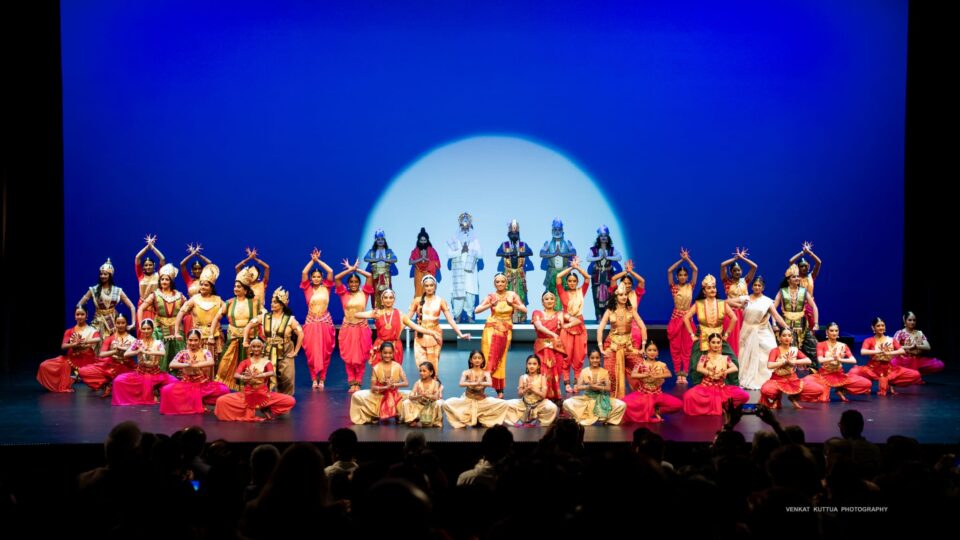
BY JYOTHSNA HEGDE
Duluth, GA, April 3, 2026: Some productions narrate a story. Others awaken it within. Kalaivani Academy’s Avyaja – The Untainted Truth unfolded as the latter, a Bharatanatyam dance ballet held at the Gas South Theater on March 28, that did not merely depict the Mahabharata but distilled its emotional essence into movement, music, and meditative stillness. Centered on the lives of Kunti, Gandhari, Draupadi, and Bhanumathi, the production explored the idea of “Avyaja” as a truth unadorned, unshaken, and deeply human.
Conceptualized and choreographed by Guru Padmaja Kelam, with original music by Smt. Asha Ramesh, the production bore the signature of artistic refinement and emotional intelligence. The music, recorded at Societysound, flowed with textured richness through the contributions of Asha Ramesh, Santosh Chandru, Prashanth Kallur, and Pranavi Srinivasa, creating an immersive sonic landscape that elevated every movement on stage.

The opening Nrithyanjali emerged like a quiet dawn. Each step was deliberate, each gesture imbued with reverence, transforming the stage into a sacred space of offering. The Sutradhari moved with measured grace, not merely guiding the narrative but weaving an invisible thread between time and thought, inviting the audience into a contemplative journey.
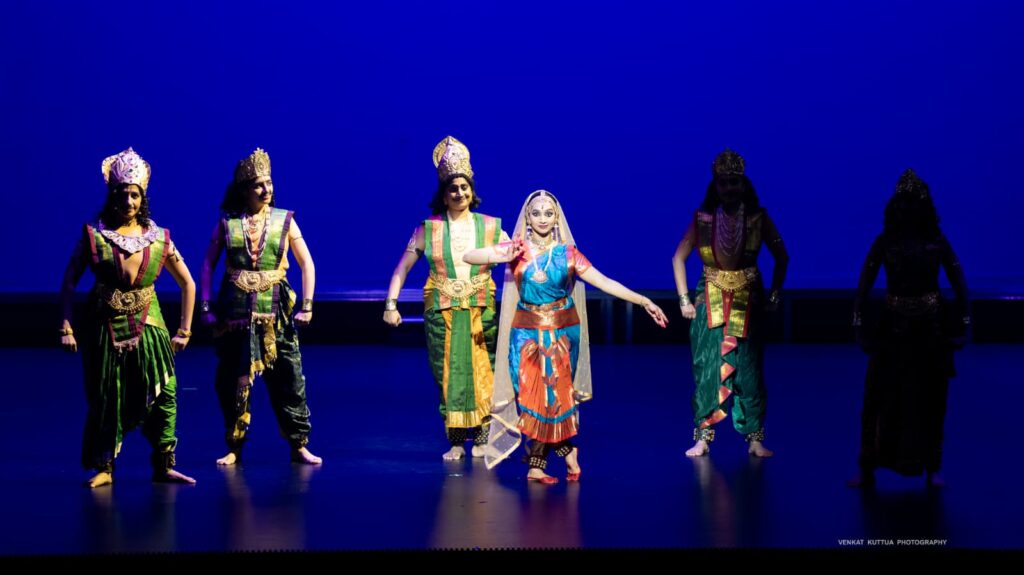
In the first scene, Princess Kunti appeared luminous in her innocence, her movements light and unburdened, like a breeze that has yet to encounter resistance. Her curiosity shimmered through delicate expressions, and as she invoked the divine, the choreography subtly deepened. Wonder gave way to awe, and awe to an unspoken foreboding. The moment lingered, suspended between beauty and consequence, capturing the fragile turning point where destiny quietly takes hold.
The second scene revealed Kunti’s evolution with striking emotional layering. Her acceptance of Madri was portrayed with expansive grace, her movements open and inclusive, dissolving any trace of rivalry. As fate tightened its grip through Pandu’s curse, her choreography grew grounded and resolute, embodying quiet endurance. In the tender sequences where she embraced all her children, her abhinaya softened into profound warmth, transforming motherhood into an act of boundless compassion. The choreography here flowed like an unbroken river, steady, nurturing, and unwavering.
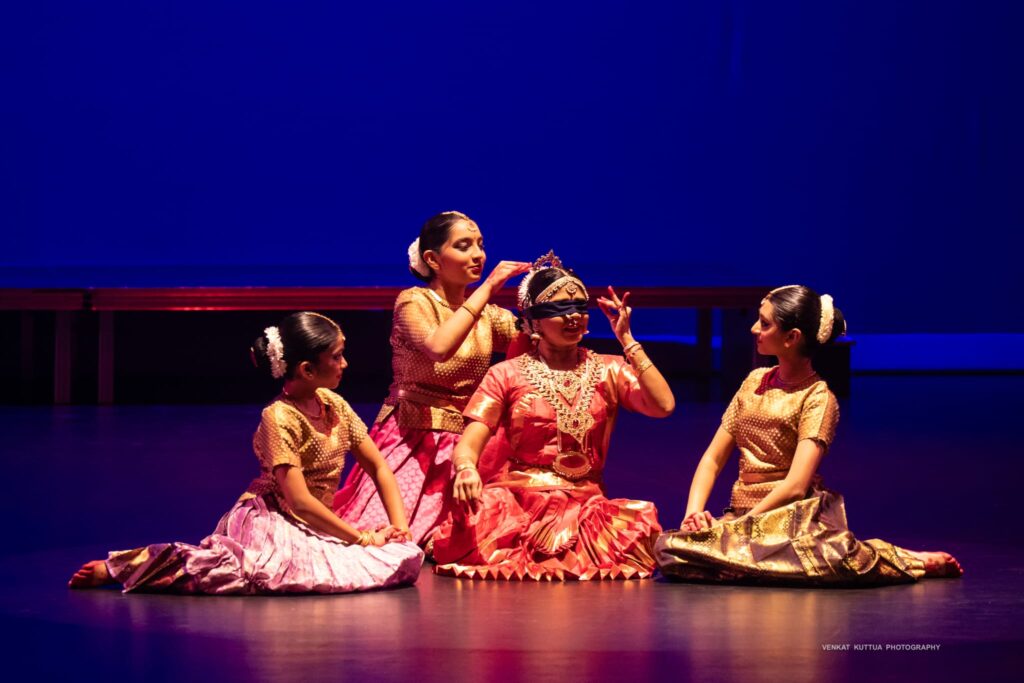
Gandhari’s entrance shifted the emotional palette to one of introspective intensity. Her initial grace carried an undercurrent of anticipation, which soon gave way to the shock of revelation. The act of blindfolding herself was rendered with deliberate slowness, each movement weighted with meaning. Guru Padmaja Kelam’s choreography embraced restraint, allowing stillness to become expression. Gandhari’s inner world unfolded not through elaborate sequences but through controlled, precise gestures that revealed strength forged in silence and sacrifice.
The ensemble of the Pandavas with Kunti brought a sense of rhythmic unity to the stage. Their synchronized movements created patterns of harmony, each step aligned with purpose and discipline. The choreography skillfully balanced symmetry with subtle tension, hinting at the fractures that lay ahead. It was a visual representation of dharma in motion, steadfast yet tested.
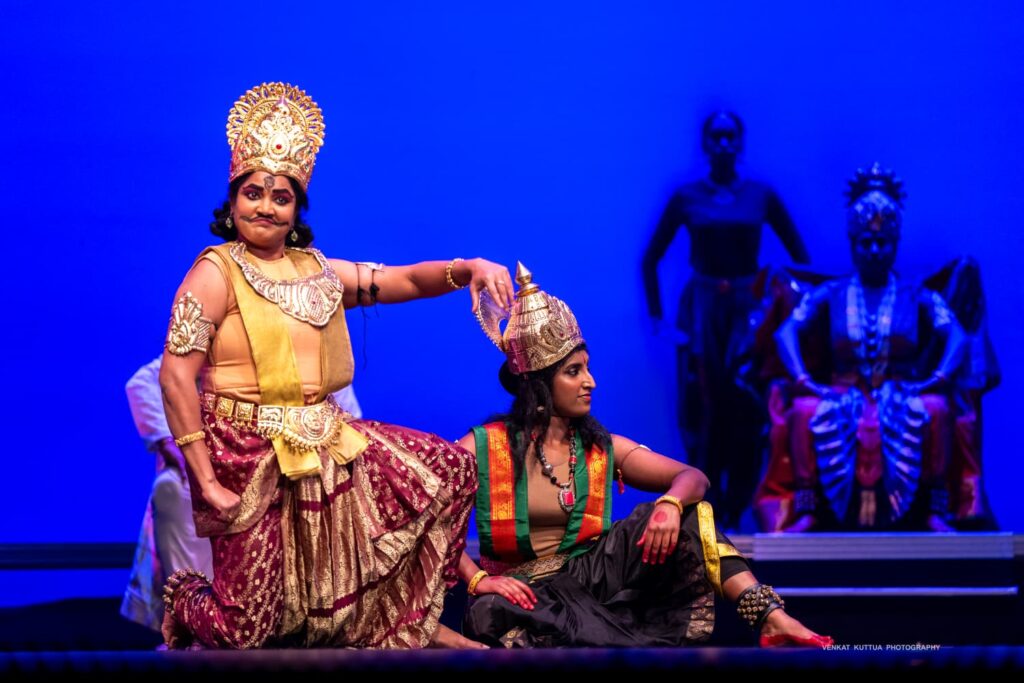
The Dice Game scene rose as a powerful dramatic crescendo. The choreography here was taut and deliberate, every movement charged with unease. Draupadi’s anguish unfolded with dignity, her expressions piercing through the silence that surrounded her. The stillness of the elders became a striking visual motif, their inaction echoing louder than any gesture. The space itself seemed to hold its breath, as the choreography transformed silence into indictment, compelling the audience to confront the weight of complicity.
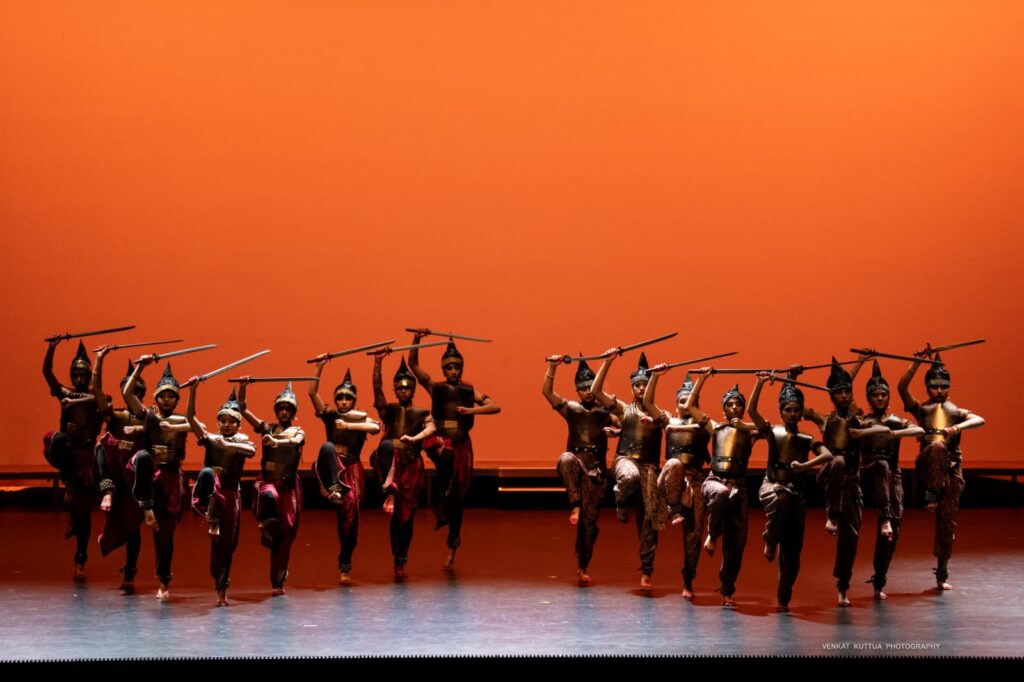
The war sequence erupted with kinetic intensity. Movements became sharp, expansive, and forceful, cutting through space with urgency. Rhythmic patterns surged and collided, mirroring the chaos of battle. Yet, beneath the physical dynamism lay an emotional undercurrent of inevitability and loss. The choreography resisted spectacle, instead presenting war as a culmination of choices, where every movement carried the burden of consequence.
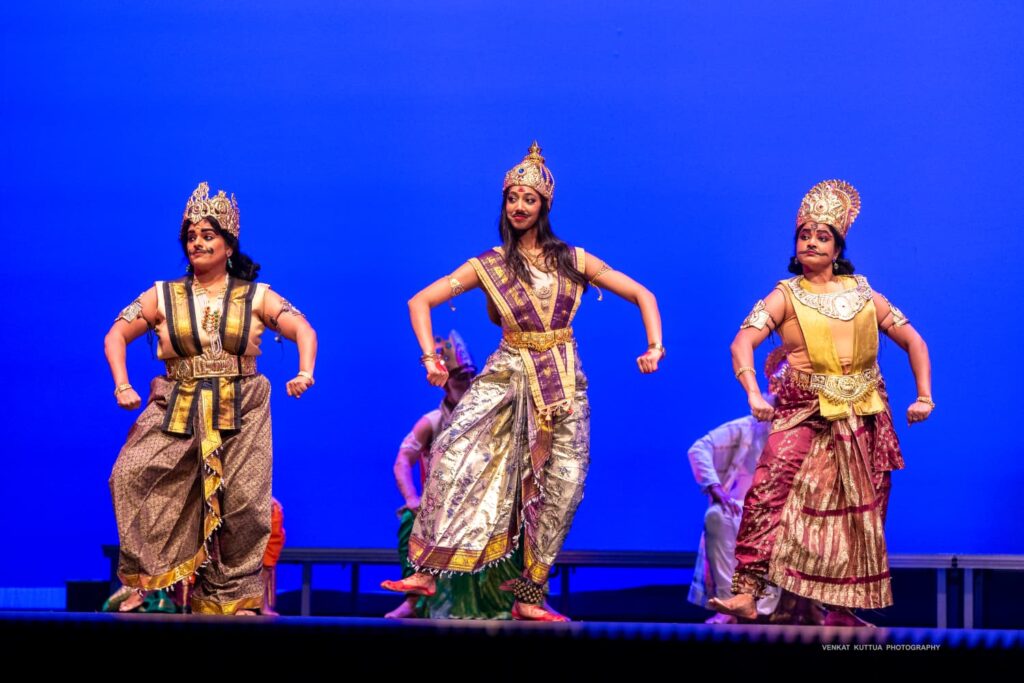
Bhanumathi’s presence introduced a gentle yet profound shift. Her movements were fluid and composed, offering a sense of stillness amidst turbulence. Through subtle glances and measured gestures, her relationship with Duryodhana unfolded with tenderness and quiet strength. The choreography here was understated yet deeply expressive, revealing emotional depth through simplicity. Her presence softened the narrative, allowing the audience to glimpse love that existed beyond conflict.
The Lament and Reflections sequence brought together the four women in a hauntingly beautiful tableau. Each figure moved within her own emotional landscape. Kunti’s gestures carried the heaviness of unspoken truths, Gandhari’s restraint trembled with contained grief, Draupadi stood with a quiet, resolute dignity, and Bhanumathi’s sorrow flowed with intimate vulnerability. The choreography layered these emotions with remarkable sensitivity, allowing each narrative to coexist while forming a unified expression of loss and introspection.
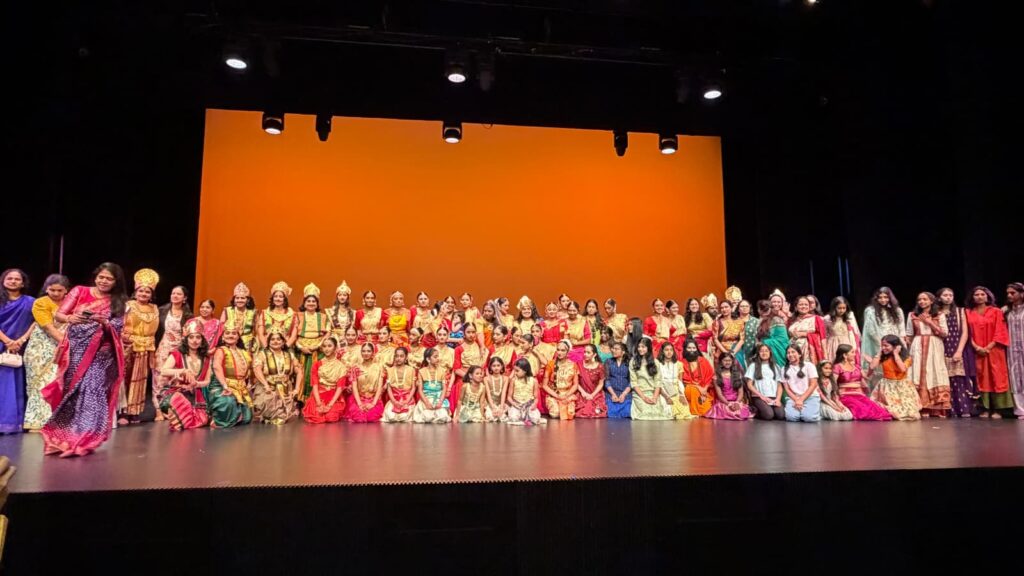
The Bhanumathi Jathi unfolded as a study in resilience. The rhythmic precision of the sequence was matched by emotional clarity, as each movement conveyed strength that did not waver even in the face of impending loss. The choreography balanced technical intricacy with expressive depth, creating a moment that was both powerful and deeply moving.
The concluding Thillana burst forth with vibrant energy, restoring movement and brightness to the stage. The choreography sparkled with rhythmic vitality, yet retained an undercurrent of grace shaped by the journey that preceded it. It felt less like a return to joy and more like an evolution into it, where renewal carried the memory of all that had been experienced.
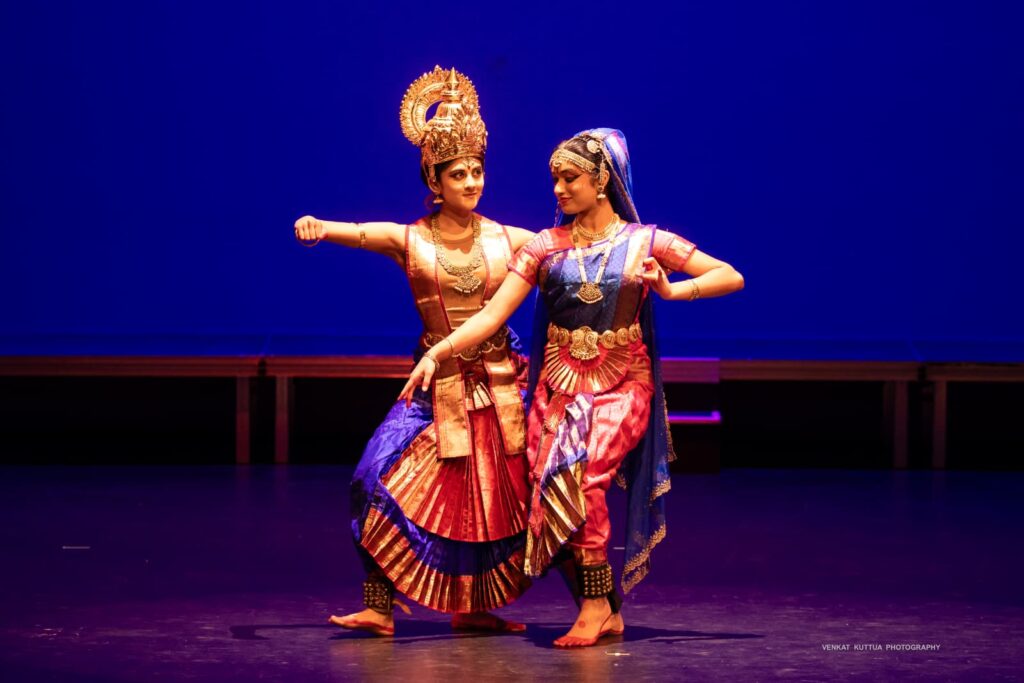
Guru Siddarth Kelam’s role as producer and nattuvangam artist provided a strong rhythmic foundation that held the production together with precision and clarity, ensuring seamless coordination between music and movement.
At its core, the production was a testament to Guru Padmaja Kelam’s choreographic brilliance. Her work demonstrated an intuitive understanding of how to translate complex emotional and philosophical ideas into movement that was both accessible and profound. Each sequence bore her signature ability to merge tradition with innovation, creating choreography that felt timeless yet immediate.
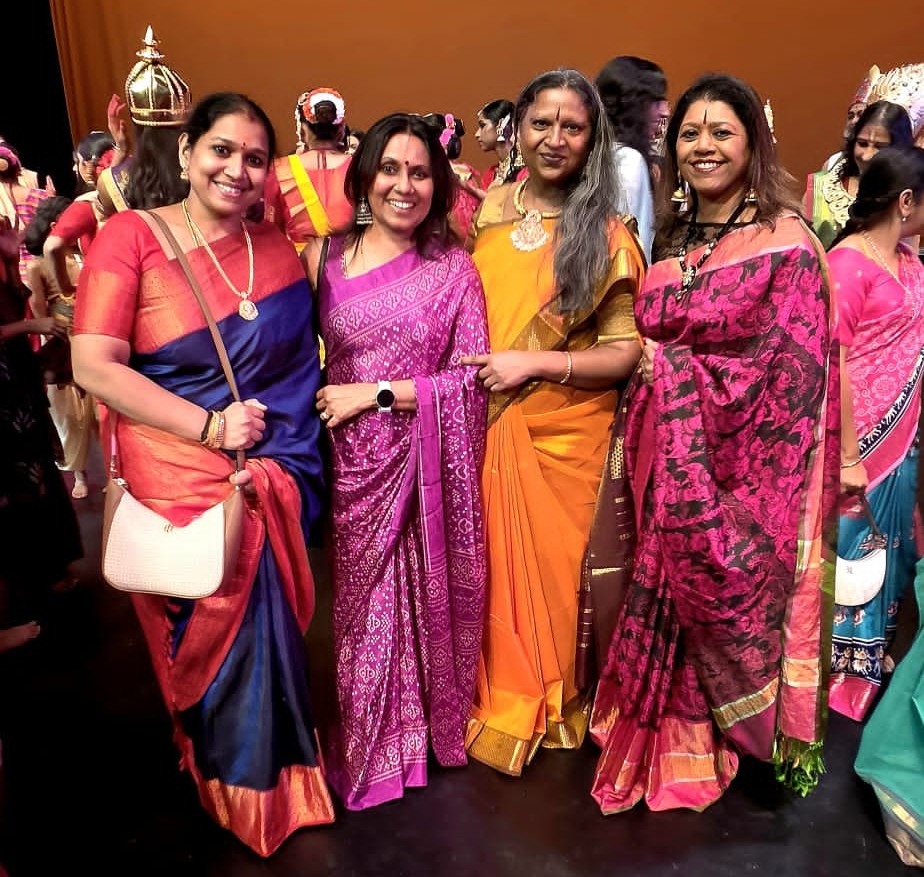
Avyaja – The Untainted Truth ultimately transcended performance to become an experience of introspection. It did not seek to define right or wrong, but to illuminate the spaces in between. In doing so, it reminded the audience that truth, in its purest form, lies not in perfection, but in sincerity.
