




NRI PULSE STAFF REPORT
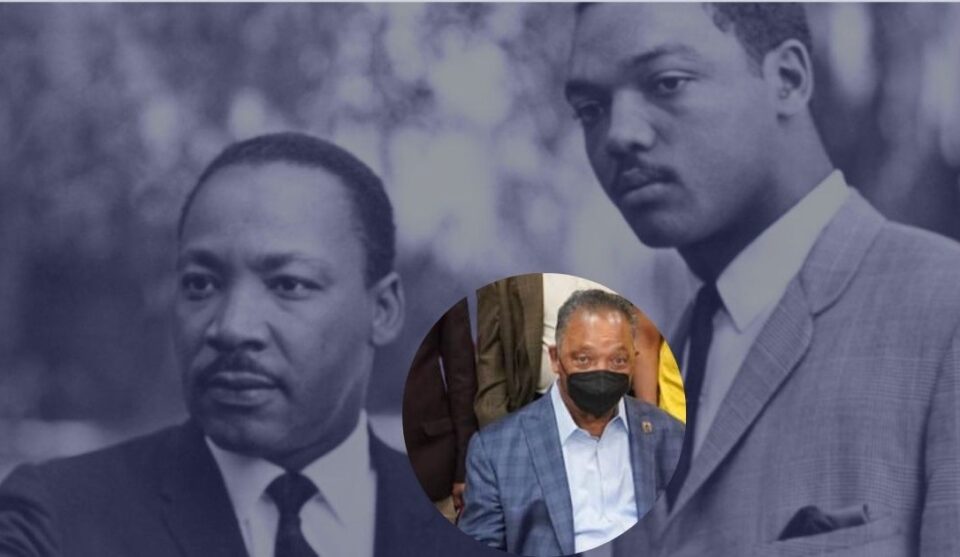
Rev. Jesse Jackson, the towering American civil-rights leader whose career spanned more than half a century, died on February 17, 2026, at the age of 84. A protégé of Martin Luther King Jr. and one of the most visible voices for racial and economic justice in the United States, Jackson’s influence extended far beyond American borders — including a longstanding and deeply documented connection to India and the philosophy of Mahatma Gandhi.
A civil-rights legacy shaped by Gandhi’s philosophy
Jackson often described the American civil-rights movement as part of a global moral tradition rooted in Gandhi’s doctrine of nonviolent resistance.
Like King before him, Jackson viewed India’s independence struggle not merely as national history but as a universal model of social transformation. Gandhi’s philosophy of satyagraha — nonviolent resistance grounded in moral force — became central to Jackson’s understanding of political change.
Throughout his public life, Jackson repeatedly emphasized that movements for justice in different parts of the world are interconnected. He frequently framed civil-rights activism as a continuum — from Gandhi in India to King in America to modern global struggles for equality.
Direct engagement with India
Jackson’s connection to India was not symbolic — it was documented through visits, speeches, and public participation in national commemorations.
Institutional records confirm that he traveled to New Delhi to deliver an international keynote address on Gandhi’s life and philosophy during commemorations marking the anniversary of Gandhi’s martyrdom. His address highlighted the continuing relevance of nonviolent resistance in confronting injustice.
He also visited historical sites associated with India’s independence movement. During a trip to Kolkata, he toured Netaji Bhawan, the former residence of independence leader Subhas Chandra Bose, where he wrote a message linking India’s major freedom figures.
Jackson also spoke at major intellectual and cultural venues in India, placing him among global figures invited to reflect on democracy, peace, and human rights.
Why his legacy resonates with Indian Americans
For many Indian Americans, Jackson represented a living embodiment of the Gandhi–King moral tradition — a historical bridge connecting India’s independence movement with the American civil-rights struggle.
That intellectual lineage has long been central to how many diaspora communities understand global justice movements:
- Gandhi’s nonviolent resistance shaped King’s strategy
- King’s movement reshaped American democracy
- Jackson carried that legacy into late-20th and early-21st century activism
His work on voting rights, economic equality, and coalition-building reflected the same philosophical roots that shaped India’s freedom movement.
Indian American leaders reflect on Jackson’s legacy
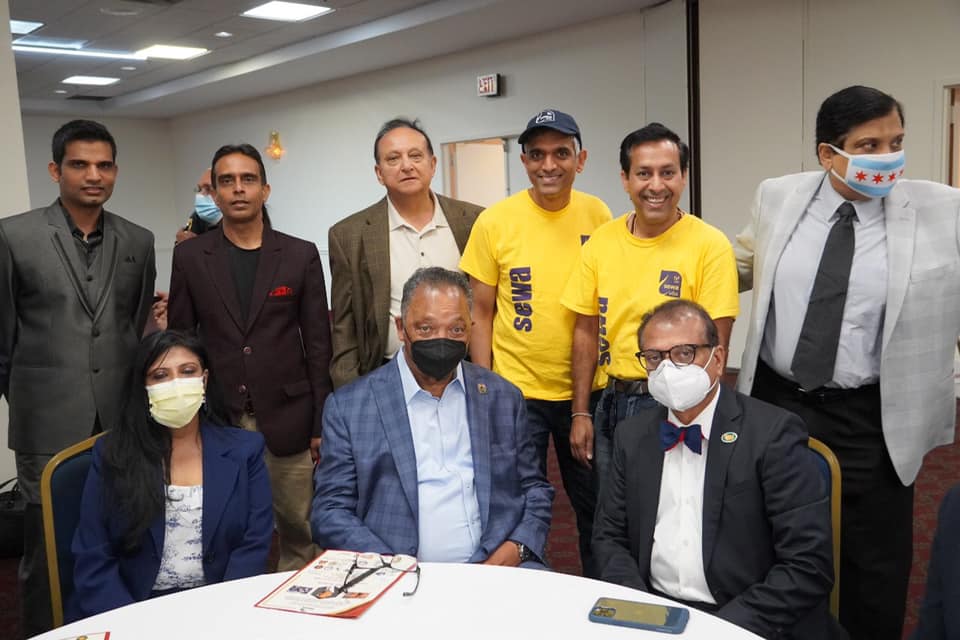
Prominent Indian American elected officials and public figures across the United States shared tributes following Jackson’s death, underscoring his lasting influence on political leadership, coalition-building, and the expansion of democratic participation.
Congresswoman Pramila Jayapal credited Jackson with shaping her own journey in public service:
“My own journey in public service was only made possible because of Rev. Jesse Jackson.
🚪 He opened doors that had been locked for generations.
🌉 He built bridges where others built walls.
❤️ He taught us that organizing is love in action.We will keep organizing. We will keep building coalitions. We will keep fighting for dignity, justice, and democracy.
Rev. Jackson, we will carry your legacy forward.”
Congressman Ami Bera described Jackson as a transformational force in American democracy:
“Janine and I are saddened to learn of the passing of the Reverend Jesse Jackson.
A giant of the Civil Rights Movement, Reverend Jackson devoted his life to making our nation fairer and more just. His leadership brought more voices into our democratic process and challenged America to live up to its highest ideals.
Our thoughts are with his family, loved ones, and the countless people he inspired through a lifetime of courageous leadership and service.”
Congressman Ro Khanna highlighted Jackson’s voice for those marginalized by power and his historic political influence:
“Reverend Jackson spoke for all those who the powerful do not see. He inspired us to build a rainbow coalition. His 1988 Convention speech is one of the greatest in our nation’s history. He was a giant of our times.
“Every one of these funny labels they put on you, those of you who are watching this broadcast tonight in the projects, on the corners, I understand. Call you outcast, low down, you can’t make it, you’re nothing, you’re from nobody, sub-class, underclass—when you see Jesse Jackson, when my name goes in nomination, your name goes in nomination…
Keep hope alive!””
Congressman Raja Krishnamoorthi emphasized Jackson’s lifelong commitment to justice and human dignity:
“Rev. Jesse Jackson was a towering champion of civil rights and human rights who devoted his life to expanding the promise of America. Those of us who knew him saw firsthand his unwavering commitment to justice and dignity for all. May we honor his legacy by continuing his work.”
Congressman Shri Thanedar expressed condolences to Jackson’s family and reflected on his national impact:
“I am deeply saddened to hear of the passing of Rev. Jesse Jackson. His lifelong commitment to civil rights and human dignity helped shape our nation and will remain part of his enduring legacy.
I am praying for the Jackson family during this difficult time, and for my colleague
@rep_jackson
as he mourns the loss of his father. May they find strength, comfort, and peace in the days ahead.”
A global voice for justice
Beyond the United States, Jackson’s activism frequently crossed borders — negotiating hostage releases, supporting anti-apartheid struggles, and speaking internationally on peace and democracy. His international engagement reflected a consistent belief: that human rights are universal and that struggles for justice are interconnected.
India — as the birthplace of modern nonviolent political resistance — occupied a central place in that worldview.
A legacy that transcends nations
With Jackson’s death, the world loses one of the last towering figures of the generation directly shaped by the civil-rights era.
But his legacy continues to resonate across continents — especially in the shared moral tradition linking India’s freedom movement to America’s long struggle for racial equality.
In that sense, Jackson’s life story is not only American history. It is part of a global narrative of nonviolent resistance that began in India and reshaped the modern world.
Cover photo credit: B&W: Rainbow PUSH Coalition website.
