




BY HANU KARLAPALEM*
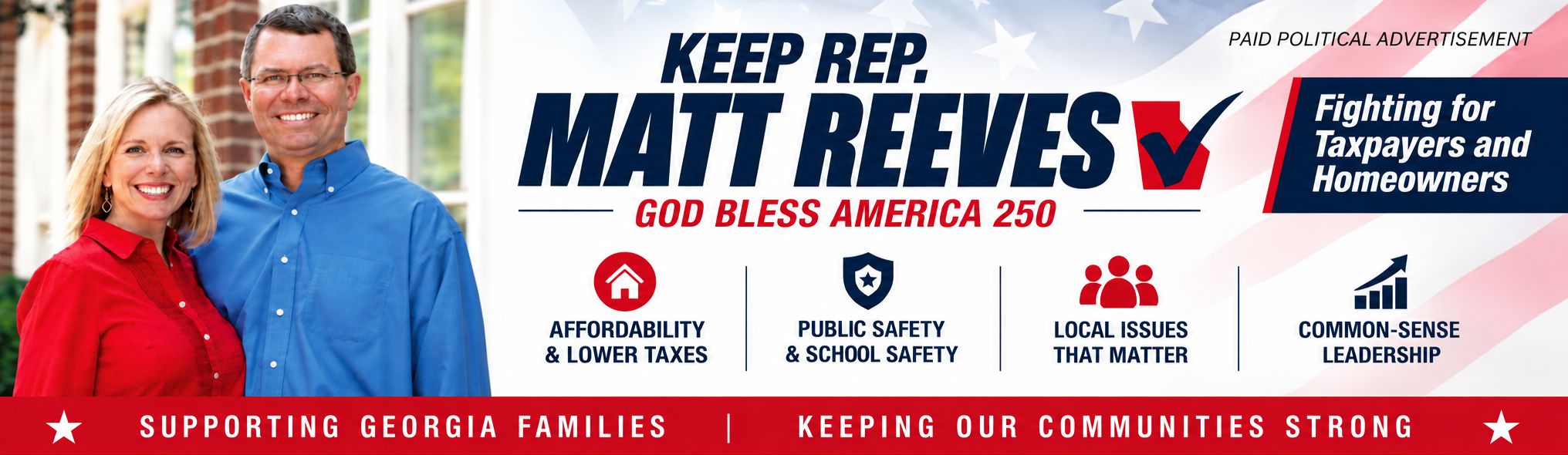
I never imagined I would see the day when people from my own community — educated, accomplished Indian Americans, especially naturalized citizens who benefited from America’s democratic protections — would stand next to political leaders openly undermining those same protections. Yet I’ve seen the photos, watched the videos, and heard the boasts: invitations to exclusive fundraisers, selfies with politicians who attack immigrants, and prideful claims of “having influence” in rooms where rights are being negotiated away.
And every time I see it, something inside me tightens.
My wife and I came to the United States like countless others: with hope, hard work, and trust in the Constitution. For more than 25 years, as a naturalized citizen, small tech business owner, and community leader in Alabama, I have built my life under a system that — despite its flaws — protected my rights and gave my family opportunities we would not have had anywhere else. That system is now under threat, not just from extremist politicians, but also from minority elites who believe proximity to power is more valuable than principle.
Let’s be clear: authoritarianism in the U.S. is no longer theoretical.
It has crept into statehouses, school boards, and even city councils. Project 2025 — the far-right plan to seize control of the federal bureaucracy, punish political opponents, and erode civil rights — is not a fringe idea; it is a blueprint. And some in the Indian American community are aligning themselves with the movement behind it.
Why?
Some believe it will strengthen India’s geopolitical position. Some want to elevate Hindu identity in domestic politics. Some simply enjoy access, prestige, and proximity to power. Some are “fearfully silent.” But whatever the motivation, the result is the same: they lend multicultural legitimacy to an agenda that is profoundly anti-democratic and anti-American. These alliances are politically reckless and morally treasonous — not in the legal sense, but in the sense of betraying the very democratic values that allowed our communities to flourish.
Far-right Hindu American organizations have adopted a strategy we’ve seen in other communities: fusing ethnic pride and religious identity to justify authoritarian policies. They show up at policy briefings, interfaith events, and fundraisers, claiming to speak for “the community,” when in reality, they represent a small, wealthy, elite, and politically connected minority.
This phenomenon is not new. Every colonial and authoritarian system has relied on collaborators and enablers.
The British Raj depended on Indian intermediaries — local elites, clerks, and landlords — to enforce policies that harmed their own people. Today, some diaspora elites are playing a similar role: providing cover and credibility to movements bent on weakening democratic institutions.
What is most disturbing is how disconnected these elites are from the history of rights in America. They enjoy privileges carved out by the sacrifices of Black Americans who fought to dismantle Jim Crow, expand constitutional protections, and secure opportunities for all minority immigrants. Without the civil rights movement, communities like ours would not have thrived here.
To align with political forces that minimize or attack that legacy is not only morally wrong — it is self-destructive.
And the influence of these collaborators is real. When they endorse extremist leaders or policies tied to Project 2025, the minority enablers make those policies appear “multicultural,” “inclusive,” or “supported by immigrant communities.” Policymakers and the media sometimes interpret their support as representative of broader community views, even though most Indian Americans reject authoritarianism.
This has consequences:
• It distorts U.S. policy toward India.
• It emboldens domestic policies that target immigrants and minorities.
• It normalizes anti-democratic ideas that should never be normalized.
And it creates confusion:
Who truly speaks for the community — the influencers attending exclusive political events, or the majority who quietly value pluralism, equality, and democratic norms?
History warns us of what happens when elites chase proximity to power instead of defending rights. They gain prestige, invitations, and influence for a while — but in the long run, authoritarian systems always turn on the very people who helped build them.
We are now at a moment where minority communities must choose:
Will we enable illiberal movements for short-term access, or will we protect the democratic values that allowed us to succeed in America in the first place? Alabama’s supermajority legislature attacks the equal rights of naturalized citizens by pre-filing a constitutional amendment bill to ban naturalized U.S. citizens from running for office. Other states may follow Alabama’s bad example. Those who wish to learn more or support efforts to block the amendment can visit:
As a naturalized American citizen who has spent decades working with diverse communities — Indian American, Black, immigrant, and Southern — I believe we can and must choose the latter: protect the democratic values. We must call out the collaborators, challenge the networks enabling them, and reaffirm that democracy is strongest when minority communities refuse to be used as political props for illiberal agendas.
The collaborators and enablers are among us. They have influence. And their choices matter, but so do ours.
Hanu Karlapalem is a naturalized U.S. citizen, a small technology business owner, former candidate for Madison Mayor and Limestone County Commission, graduate of UAH, life member and former NAACP Limestone County Second Vice President, and a proud Madison, Alabama, resident for over 25 years.
