


NRI PULSE STAFF REPORT
Washington, DC, April 2, 2026: As the U.S. Supreme Court hears arguments in the closely watched case of Trump v. Barbara, an Indian American attorney is playing a quiet but influential role in shaping the constitutional debate.
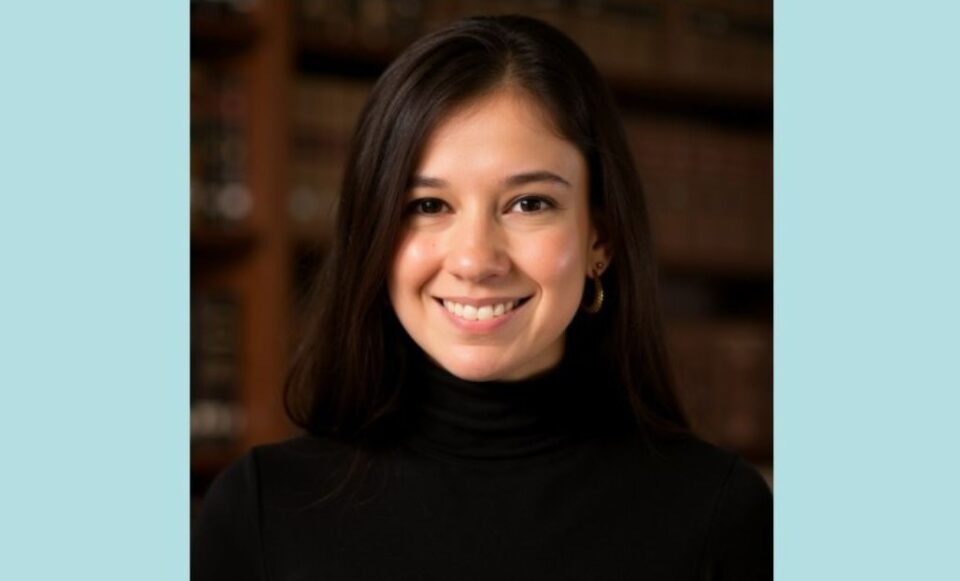
Smita Ghosh, Senior Appellate Counsel at the Constitutional Accountability Center (CAC), is among the legal minds behind a key “friend of the court” brief defending birthright citizenship under the 14th Amendment.
The case centers on an executive order issued by President Donald Trump in January 2025 that seeks to deny automatic U.S. citizenship to children born in the country unless at least one parent is a citizen or lawful permanent resident. The order challenges the long-standing interpretation of the Citizenship Clause, which has traditionally granted citizenship to nearly all individuals born on U.S. soil.
While Ghosh is not arguing before the court on behalf of either party, her role in crafting legal arguments through CAC’s amicus brief has placed her at the center of the broader constitutional conversation. Legal observers note that such briefs often play a critical role in influencing how justices interpret complex constitutional questions.
Ghosh’s work draws heavily on constitutional history, particularly the original meaning of the 14th Amendment. Her arguments challenge the administration’s position that citizenship can be limited based on factors such as parental “domicile” or legal status—terms she and other legal scholars say do not appear in the Constitution’s text.
Her analysis also relies on longstanding precedent, including the landmark 1898 Supreme Court decision in United States v. Wong Kim Ark, which affirmed that children born in the United States to immigrant parents are citizens under the Constitution.
During recent oral arguments, several justices appeared to question whether the government’s attempt to introduce new conditions for citizenship is consistent with the Constitution’s original framework, signaling the high stakes of the case.
Ghosh, who holds both a law degree and a doctorate in American history, is part of a growing group of Indian American legal professionals contributing to high-profile constitutional cases. Her dual expertise has positioned her as a key intellectual voice in debates at the intersection of immigration law and constitutional interpretation.
Ghosh, who holds both a law degree and a doctorate in American history, is part of a growing group of Indian American legal professionals contributing to high-profile constitutional cases. She graduated cum laude from the University of Pennsylvania Law School and also earned a Ph.D. in American History from the University of Pennsylvania. In 2020, the American Society for Legal History selected her as a Kathryn T. Preyer Scholar for her paper titled “Policing the ‘Police State’: Detention, Supervision, and Deportation During the Cold War.” She received her undergraduate degree, with High Honors, from Swarthmore College.
Her dual expertise in law and history has positioned her as a key intellectual voice in debates at the intersection of immigration law and constitutional interpretation.
For immigrant communities across the United States, the outcome of Trump v. Barbara could have far-reaching consequences. The case is widely seen as one of the most significant challenges to birthright citizenship in decades, with implications for how the nation defines citizenship itself.
A decision from the Supreme Court is expected later this year.
Cover photo courtesy: Smita Ghosh | Constitutional Accountability Center
