


BY MIRA THAKKAR*
Cumming, GA, March 6, 2026: Walking through the hallways of any Forsyth County high school can feel far more different than it did 20 years ago—and that’s not just because students are more preoccupied with their phones. With the influx of Indian immigrants since the 2010s, Indian culture has flooded the hallways, changing celebrations, academic competitiveness, and cultural diversity.
In the past, Forsyth County had an infamous reputation of being a predominantly white county, even as Atlanta developed into a powerful hub in the Southeast. However, today Forsyth County is home to thousands of immigrants, and their population continues to grow each year. In particular, Forsyth County is now one of the most Indian-American populated counties in the state of Georgia, as the county has seen a concentrated rise in Asian immigrants. In fact, according to usafacts.org, the Asian population has tripled from 2010 to 2022.
Currently, there are roughly 35,000 Indian Americans living in Forsyth County, according to recent census-based estimates. Many families are drawn to the area by its highly ranked schools and expanding housing developments. As the county’s population has grown more diverse, students in particular have experienced the cultural shift in their classrooms and social lives, changing what daily life looks like for many high schoolers across the county.
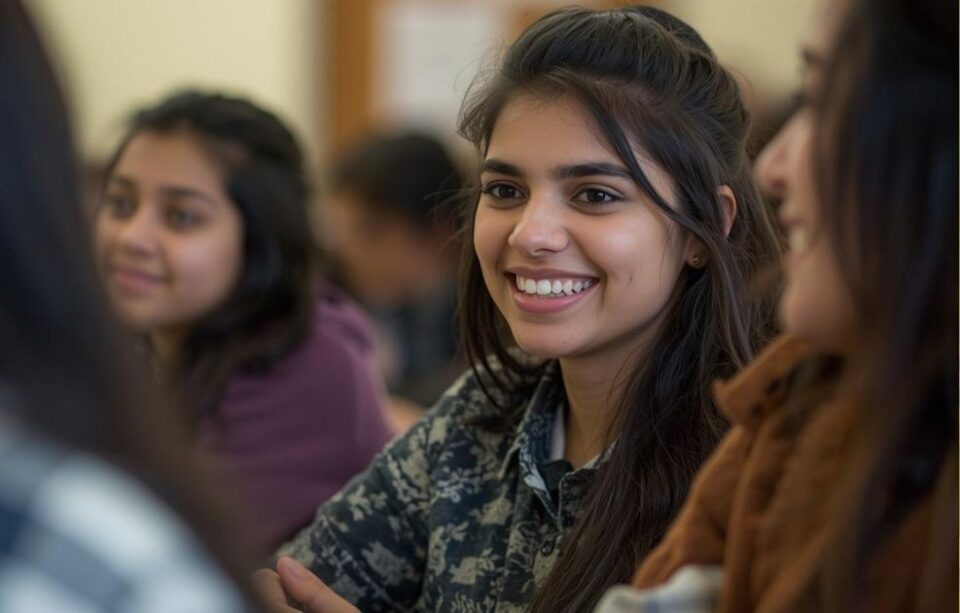
A non-Indian student at South Forsyth High School, Lillian Chia, believes that there are numerous undeniable effects of the school’s Indian population, primarily presenting themselves through academics.
“I think in general it just creates a more competitive environment just because of different parenting styles and things become normalized,” Chia said. “The values and pressures that certain parents or groups might have in their homes they may bring to school, and that kind of becomes the environment.”
This impact is clearly illustrated in the numbers as well. Consistently, Lambert has been ranked as the 4th Best Public High School and the 6th Best College Prep Public High School in Georgia, and this trend has only been getting stronger in recent years.
However, with this academic pressure can come concerns about students’ mental health as well. Science teacher at Lambert High School, Joanna Spalding, has noticed this trend in her students’ behavior throughout the year, seeing that academic competition has led to increased performance anxiety and posed mental health challenges for students. She sees her students feeling restless before, after, and during tests, and this extends to extracurricular competitions and standardized testing such as the SAT.
“It is a healthy struggle because it can motivate some people to rise to the challenge,” Spalding noted. “But I have seen higher levels of anxiousness, which shows me how much support I need to offer as a teacher.”
Indian-American Lambert student Sneha Ramineni agrees that there is increased competition within the Asian community as well, but has seen a different side of the school because of her identity. Due to her culture, Ramineni has been able to make new friends by bonding over shared experiences, but she’s also faced stereotyping from within her community and outside. She has noticed how having a higher Indian population has led to students being more comfortable making racist comments toward others.
“I think being Indian means a lot of people make jokes about their own cultures, and it’s definitely an issue when other races join in and start harmful stereotypes,” Ramineni elaborated.
As a child, Ramineni struggled with the feeling of being “too Indian” versus being “not Indian enough,” especially as she went between home life and school life, with elements like holidays and foods changing throughout her life depending on her environment. Not having shared spaces to bond over her culture or meet people who have those same experiences sometimes led to her feeling doubted in her culture. To help prevent this from being an issue at Lambert, Ramineni has worked toward spreading her culture in an open way and promoting love and acceptance. She has primarily done so through being an officer of the Indian Cultural Society, where she’s been able to bridge cultural gaps with others and in her own identity.
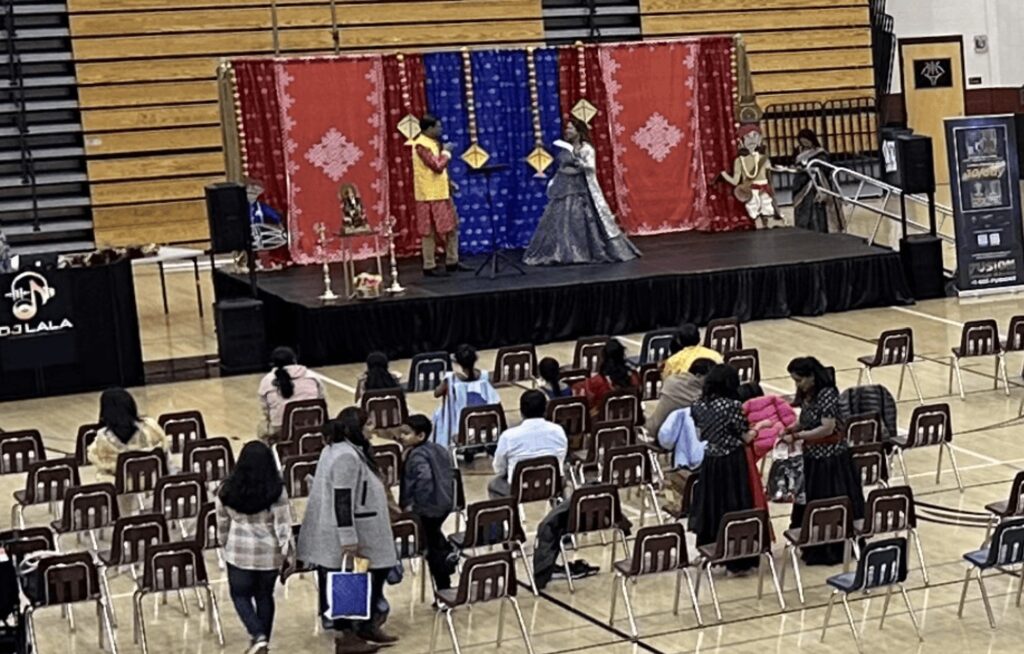
“Last year we had planned a really big Garba night at Lambert, and that really made me feel at home with my own culture because I was able to experience spreading it to other people that weren’t just Indian and were from different backgrounds,” Ramineni added.
Non-Indian student at Lambert High School, Kassia Romanchik, believes that these events have helped her learn more about the culture and be a part of it.
“I would honestly go to these events,” Romanchik said. “Obviously, I would rather go with someone who knows about it so that they can introduce me to it, but that’s true for any event.”
Both Indian and non-Indian students face different situations as school demographics evolve, affecting their personal identities immensely. As Forsyth County high schools diversify even further, analyzing the impact of these changes is crucial to understanding how social landscapes change for youth.
*Mira Thakkar is an intern at NRI Pulse.
