



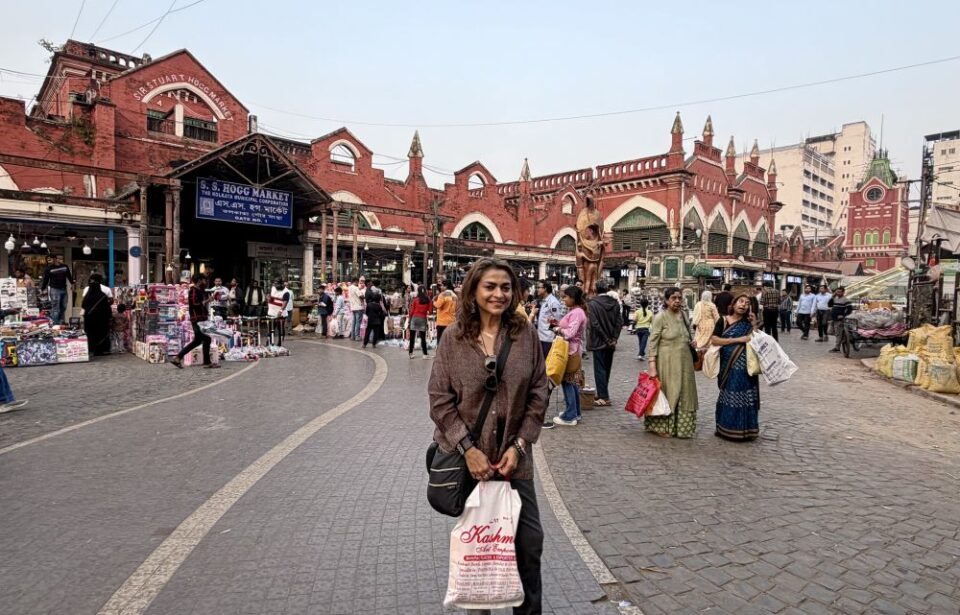
BY MONI BASU*
Indigo Flight 6E162 touched down at 5:40 in the evening at Netaji Subhas Chandra Bose International Airport in Kolkata. It wasn’t the smoothest of landings, and for a second, visions of the Airbus skidding off the runway flashed before me. Deplaning and then exiting the airport turned out to be a long and arduous process. My small Samsonite hard case was one of the last to appear on the conveyor belt in the arrivals hall. It took many minutes before my Uber driver arrived in a white Maruti Swift, and then we sat in rush-hour traffic for much longer than the hour-long ride I had anticipated.
I wanted none of it to matter because I was home. But it did.
There was a time when the Kolkata airport had no jetways, and as soon as the flight attendants opened the plane’s door, balmy air gushed in, carrying with it the distinct odor of this city—pungent, smoky, oily, dirty. Back then, tired passengers climbed down a set of metal stairs and boarded a rickety bus that drove us a few feet to what passed for the arrivals hall. Back then, luggage could take up to an hour to appear. None of it mattered because when I exited the terminal, I would see my father standing in the crowd, eagerly awaiting his daughter. He would take my bags and kiss my forehead. We would get into his mint-green Fiat Padmini 118-NE, which shared genes with the Soviet Lada, and Baba’s driver, Nityananda, would whisk us home in the stillness of the early morning hours before the chaos of the city erupted.
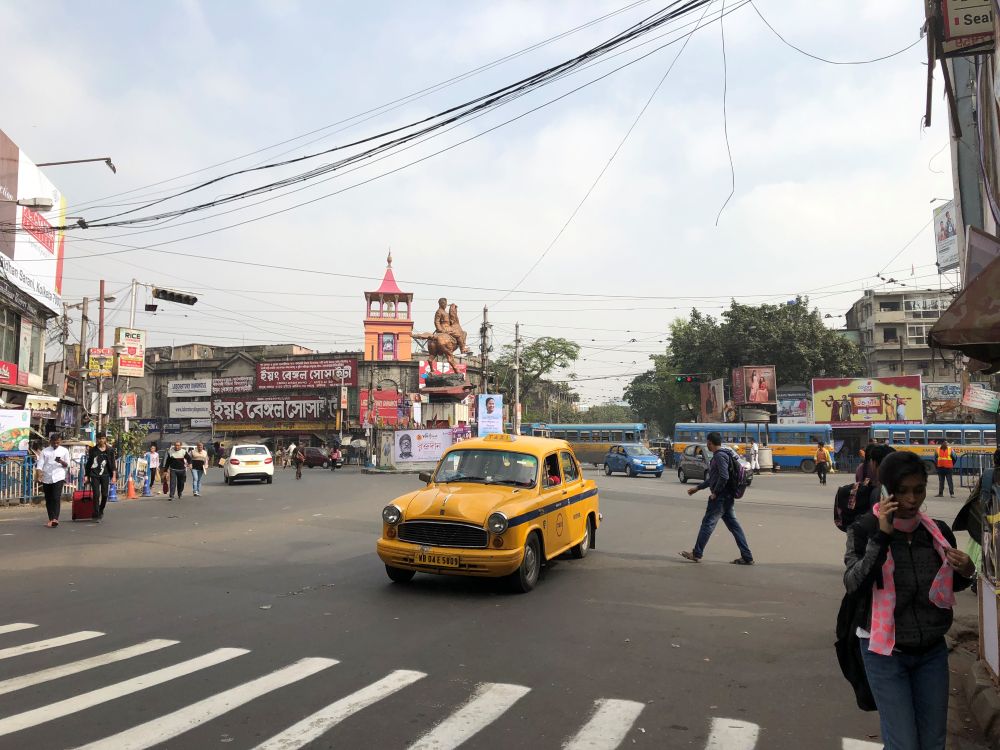
But that was long ago, and now I found myself alone in a stranger’s car, navigating streets vastly changed by the whirlwind of development in a metropolitan area struggling to accommodate 22 million people. There might have been a faster route to take on flyovers and bypasses, and I don’t know why the Uber driver decided to go the way he did—right past the 12-story flat building where my parents lived for many years until they both died in 2001. Going home to Kolkata was never the same after Ma and Baba were no longer here, after I could no longer sleep in my own bedroom. But there was Pishi, my auntie, and Kaka, my uncle. Between the two of them, I managed to find a place to stay and eat home-cooked meals. But they are gone, too, and it hardly seems fitting for me to call Kolkata home when I have to rent an Airbnb.
The Uber dropped me off near 6 Ballygunj Place, a restaurant that’s well known for its homestyle Bengali food. I fumbled my way into a dark, empty flat and took in the odor of naphthalene. The owner had stuffed mothballs into the Godrej armoire to keep the bugs at bay. I had so looked forward to my trip to Kolkata, and yet I lay there that first night wondering why I had come back to this place.
I’ve spent my entire life straddling two cultures. In that way, I am no different than any other immigrant who longs for the homeland left behind and cherishes the opportunities and comforts of America. But my parents returned to India in early 1985 after my mother suffered a massive stroke, and I visited them frequently, almost every year. When they were both at the end of their lives, I spent half my time in Kolkata, running the household. That’s how my immigrant experience differs from others. My roots grew deeper with the years, not the opposite.
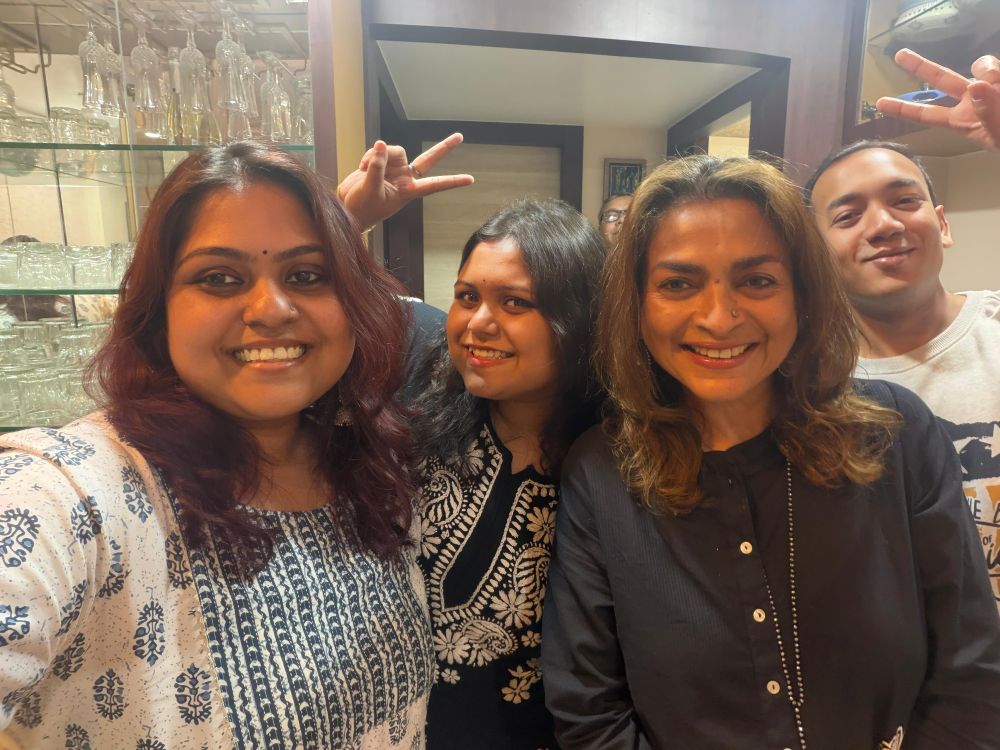
Besides, Kolkata was where I did not stand out as I often did in America. Everyone looks like me here. I am the norm, not the minority. It took me years to figure out what a big deal it was to be able to feel a part of the community, to feel that I belonged—seamlessly. For people to pronounce my name the correct way. To not have to explain my origin.
So, naturally, I thought of Kolkata as home.
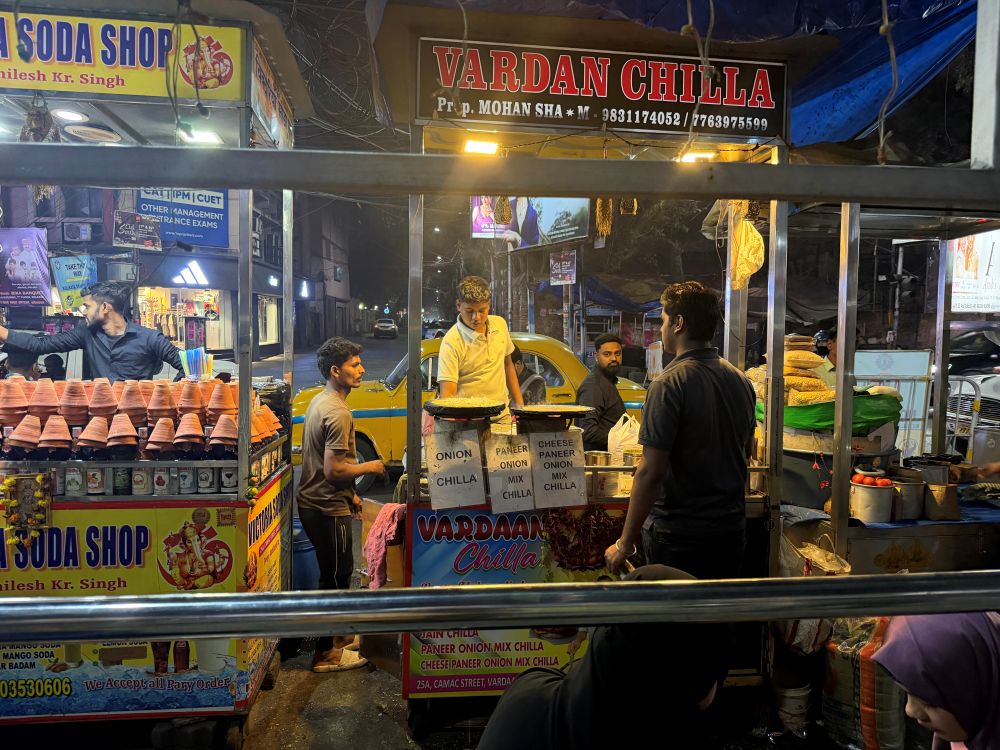
On my first full day, I walked back to my old neighborhood and smiled when I found the man who has been selling phuchkas for years on the street corner opposite Max Mueller Bhavan. Phuchkas, or pani puris, are my favorite street food. The crispy, hollow semolina shells stuffed with a spicy potato and chickpea mixture, dunked in tamarind water, are to be eaten in one bite—a perfect explosion of sour, spicy, cold, and crunchy. It’s my little tradition to down a dozen or two at the start of every trip to Kolkata, much to the horror of my health-conscious friends and relatives who fear I will get deathly ill from the tamarind water. But this was my ritual, a way to prove to myself that I was still Indian, that I still possessed a stomach of steel immune to any germ making its way into my body. I always braced for some form of Delhi belly, that traveler’s rite of passage sadly familiar to Westerners visiting India. But not once in my four decades of devoted eating had I fallen ill.
Phuchkas were just a small part of my list of things to do on every trip home: beers at Peter Cat on Park Street, ice cream on the Strand, bhel puri at the lake on Southern Avenue, bargaining for costume jewelry with the street hawkers in Gariahat, jostling with the crowds on Chowringhee, feasting on the flowers at the Horticultural Garden. And I did them all on this trip.
Yet something was still missing.
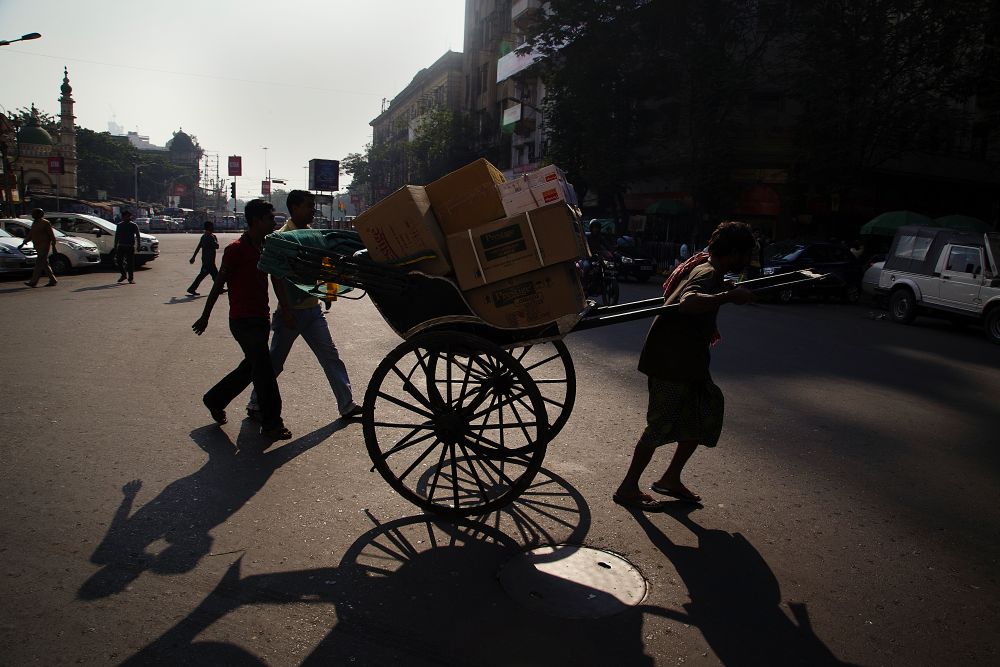
Part of it was that Kolkata has changed so much in recent years. It is no longer the behemoth of a city that moved along grudgingly, a place in which the smallest of chores could take days, weeks, or even months to accomplish. It was no longer a city of wannabes and professionals who longed to have the disposable income that would allow them to lead a middle-class life without worry. It’s possible these days for average Kolkatans to own a car, go out to eat, and buy brand-name clothing.
In my youth, entertainment options were few and far between. In the evenings, we took a bath, dressed up, and visited friends and family without advance notice, always to be welcomed into their homes for a few hours of adda, the Bengali word for which there is no accurate English equivalent. It’s perhaps best explained as a social ritual of long, unhurried, free-flowing conversation for its own sake. Adda was less about what we discussed and more about the shared pleasure of thinking, arguing, joking, and being together.
No one has time for adda anymore, and people are shocked these days if I knock on their doors unannounced.
The Kolkata I remembered so fondly was not awash in glittering malls and American chain stores and restaurants—there are a dozen Starbucks in Kolkata. I suppose the city has lost much of its old-world charm, and life here feels just as fast and furious as in any megapolis. It’s not easy anymore to walk the streets like I used to, wandering down narrow, snaking lanes and peering into the courtyards of middle-class Bengali households, from which would inevitably waft the smell of mustard, green chiles, and fish curry. These days, two-wheelers come hurtling toward you in places that used to be quiet, especially at the height of the afternoon when many Kolkatans take to their beds for siestas. Soon to be gone are the iconic black-and-yellow Ambassador taxis and the cockroach-brown minibuses that once were vital for millions of commuters. What bothered me most on the streets was perhaps the noise. Why, I wondered, does everyone have to drive with one hand constantly pressing their horns? Kolkata was always loud. This time, it felt deafening.
Several years ago, when I was still a CNN reporter, I produced a series of stories on the changes overtaking India. One focused on the vanishing vendors on the streets of Kolkata—the wallahs, folks in niche occupations like knife sharpeners, pastry sellers, mattress fluffers, and typists sitting in front of the High Court in Dalhousie. Their numbers have dwindled to almost nothing now as modernity has taken a firm grip on my city. Kolkata was looking less and less like Kolkata and becoming more and more generic—Any City, India.
Each evening, I returned to my little flat with the overpowering mothballs and took stock of the day. Everything felt so different on this trip. I watched the ceiling fan whirl above me and felt a deep melancholy set in. I was in a city bustling with humanity, and I felt alone.
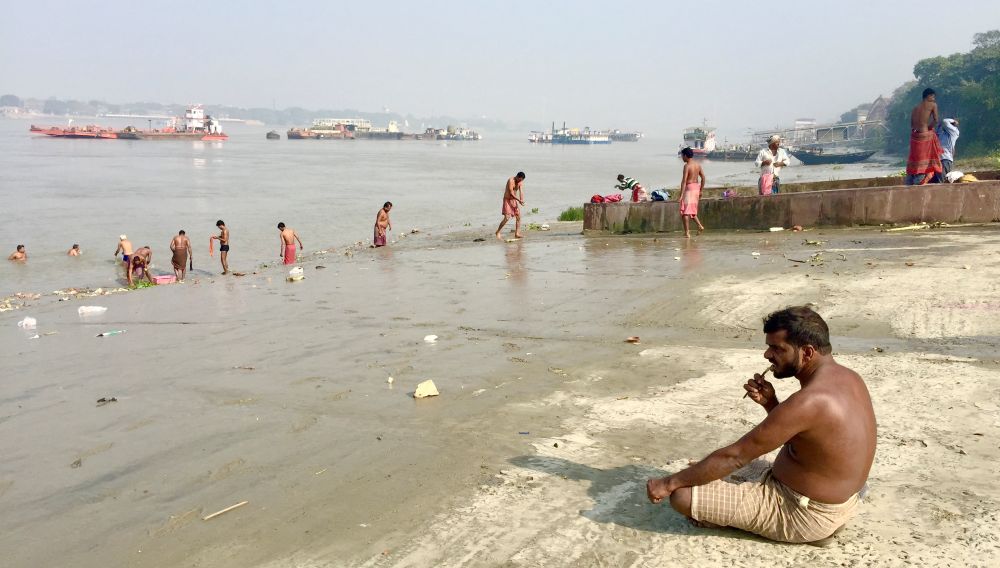
I wanted everything to feel the same, but how could it without the people I loved most? Without my parents, my aunties and uncles and cousins? Without my dearest friends? The phuchkas and beers were always with Eugene, who long ago moved to Germany. Vijay, whom I have known since fifth grade, was out of town on business. Bhel puri was a must with my cousin Ganuda, who died during the pandemic. And there was no one to appreciate, like Pishi used to do, the low-ball prices at which I was able to purchase earrings and bracelets.
I wanted desperately to go back in time, to make the people I loved return to life, to have things stay just the way I remembered them.
I suppose almost everyone feels that way about the places that hold a special place in their memories. Perhaps I was too busy on previous trips to notice, or maybe it’s because I was with my brother or my friends. When I visited two years ago, my dear friend Jan was with me, and I was so excited to introduce her to my friends and family. Our days were filled with things to do and places to visit, and before I knew it, the trip had come to an end. But this time was different. In my mothball flat, the melancholy was becoming too much to bear.
I heard the writer Kenan Orhan talk about the Turkish word huzun, which he described as “a longing for things that are missed and missed in a way that perhaps you can’t surmount but are worth missing. They’re worth collecting and holding on to and remembering them. It affects all of us deeply, whether we call it melancholy or nostalgia or huzun. I think we all have moments in our lives where, with great clarity, we become aware of a past, and we become aware of our own mortality in a way. But it makes those moments, those things that we remember tenderly, all the sweeter, I think.”
Orhan lamented that he could never go back to the Turkey he knew. He and his country had become 12-year strangers. My estrangement was so much longer. I must accept I can never go back to the Kolkata I knew—and loved. My memories, however sweet, will always trigger a longing, an ache in my soul for what is no more.
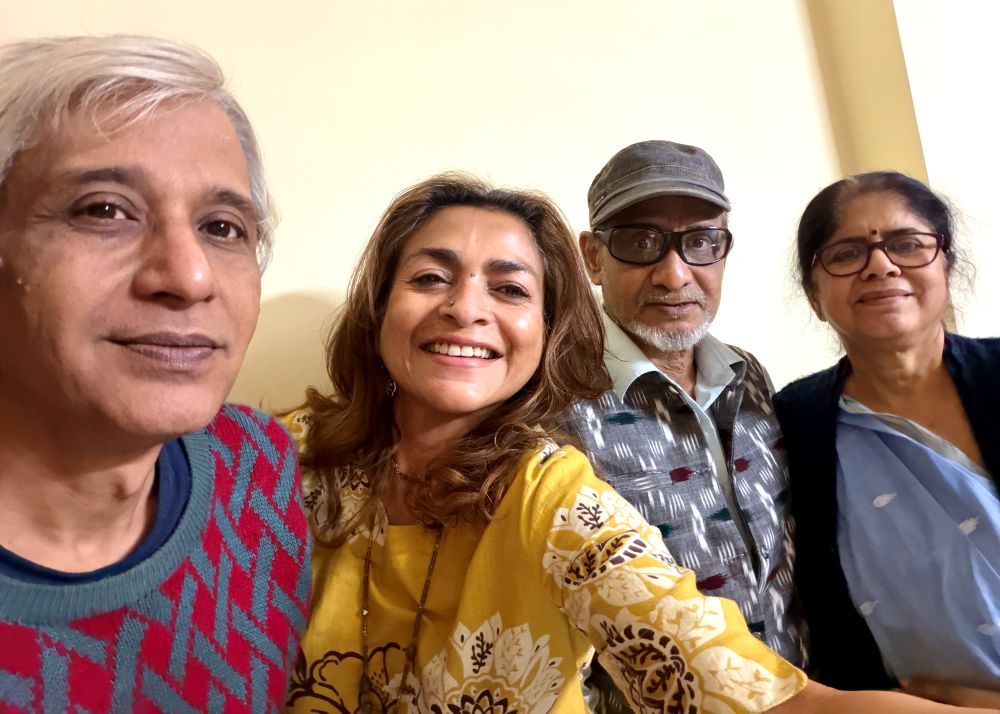
But home is not a fixed address or a city preserved in memory. It is not the humid air on arrival, the taste of tamarind water, or the blare of horns late into the night. Home is made of people—and when they are gone, what remains is the imprint they leave behind.
Kolkata is no longer the city of my childhood, just as I am no longer the young woman for whom my father waited at the airport. Time and loss have changed both my city and me. What I realized on my journey this time was that home is not always a place we return to but a place we carry with us.
*Moni Basu is an award-winning journalist, author, and director of the low-residency MFA in Narrative Nonfiction and the Charlayne Hunter-Gault Writer in Residence at the University of Georgia. She previously served as a senior writer at CNN and a reporter at The Atlanta Journal-Constitution, among other publications.Her previously published pieces on the H-1B visa topic include Why the highly coveted visa that changed my life is now reviled in America and Nationality, identity and the pledge of allegiance.
