





BY NAMITA DOGRA SUDAN*
The Netflix story is one of the most legendary “revenge” arcs in modern business history.
It began in 1997, when Reed Hastings stood inside a Blockbuster store, frustrated after being charged a $40 late fee for Apollo 13. Most people would have paid the fine and grumbled. Hastings saw a broken system.
Partnering with Marc Randolph in Scotts Valley, California, he envisioned a “gym-membership” model for movies—unlimited access, no penalties, no friction. By 1998, they launched Netflix.com with a modest library of 925 DVDs.
In a twist worthy of cinema itself, the very first DVD ever shipped by Netflix was Beetlejuice, starring a young Winona Ryder. Decades later, Ryder would become the face of Stranger Things, one of the pillars of Netflix’s global dominance.
The $40 “revenge” came full circle in 2000, when Netflix offered itself to Blockbuster for $50 million. Blockbuster laughed—and declined—failing to see the digital future rushing toward them. Today, Blockbuster survives as a single nostalgic store, while Netflix operates in over 190 countries, connecting the world through a single interface.
The Strategic Death of the Red Envelope
Netflix’s evolution from a mail-order service to a streaming-first powerhouse was neither accidental nor sudden.
The hybrid era began in 2007 with the launch of Watch Now, offering roughly 1,000 streaming titles compared to nearly 70,000 physical DVDs. Streaming was free, almost an afterthought—but the cloud-first future had already been chosen.
The real inflection point came between 2010 and 2011, when streaming viewership overtook DVD shipments. And on September 29, 2023, Netflix mailed its final iconic red envelope, closing a 25-year chapter that delivered more than five billion discs to American doorsteps.
The red envelope didn’t fail. It succeeded—and then stepped aside.
The Global Hall of Fame: Content That Changed the Game
By 2026, Netflix is no longer just a distributor; it is the world’s most influential professional studio.
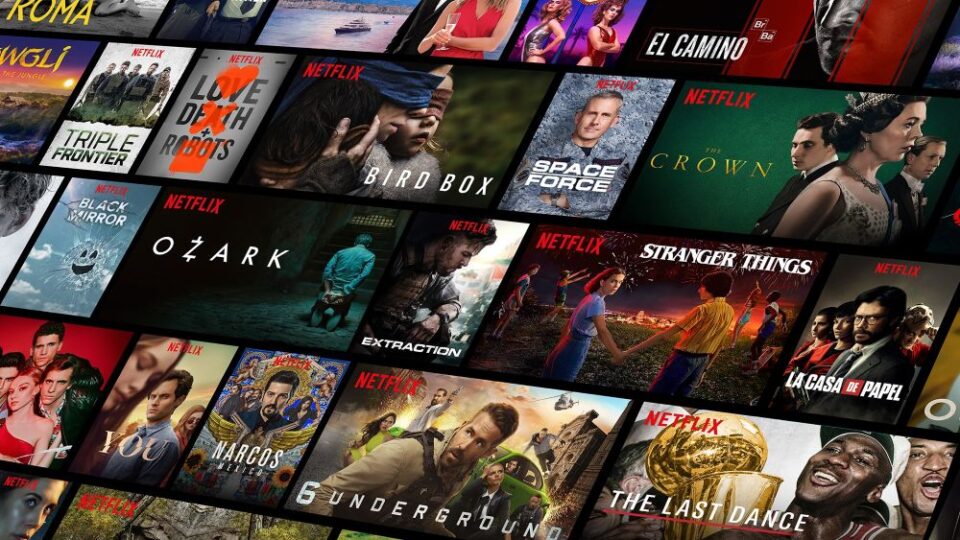
At the top sits Squid Game, the global phenomenon that shattered records with more than 1.6 billion hours watched. Close behind is Stranger Things, which concluded its run as the most-watched English-language series in history and generated an estimated $1.4 billion in economic impact.
Rounding out Netflix’s modern canon are Wednesday and Money Heist, shows that proved subtitles are not a barrier but a bridge.
The newest entrant to this elite club is Dhurandhar. After crossing ₹1,200 crore at the global box office, Netflix acquired its streaming rights in a record ₹130–285 crore deal—cementing its status as the world’s most powerful “big screen,” now carried in every pocket.
My First Encounter with Netflix (2006)
My personal relationship with Netflix began in 2006, during a visit from India to my brother in the United States. The red envelope fascinated me—not because it was flashy, but because it was frictionless. The prepaid return label felt like magic. Technology, for the first time, seemed to respect the user’s time.
By the time I moved permanently to the U.S. in 2013, the transformation was unmistakable. I bought an expensive Sony Smart TV—one that featured a dedicated Netflix button on the remote. At the time, that button felt like jewelry. Today, it’s a utility.
That TV was eventually stolen during our first year in the U.S.—a reminder of how rare and coveted such technology once was. But that, as they say, is a story for another time.
Why Netflix Still Leads in 2026
The anonymous genius who pivoted Netflix from envelopes to streaming in 2006 was followed by another visionary in 2013 who insisted Netflix deserved its own button on the remote.
Today’s leaders have gone even further—expanding into live WWE programming and NFL broadcasts, while breaking linguistic barriers through world-class dubbing and subtitling in over 30 languages. A story made in Seoul or Mumbai now lands as naturally in Georgia as it does at home.
Netflix’s library is intentionally vast: from one-time wonders to cult classics, comfort rewatches to prestige cinema. The goal is simple—there should never be a reason to close the app.
Netflix didn’t wait for faster internet. It built the content that made people demand it.
Closing: The Vision of a Borderless Cinema
Today, Netflix stands as a roughly $400-billion titan because it mastered professional evolution.
Where platforms like YouTube democratized individual voices, Netflix democratized high-end cinema—proving that a story crafted in Seoul or Mumbai can resonate just as deeply in an American living room.
From a late fee grievance to global franchises like Dhurandhar, Netflix transformed Tudum into a universal sound of storytelling. As it moves boldly into live sports and global franchises, Netflix continues to affirm a simple truth of the digital age:
The best seat in the house is wherever you happen to be holding the remote.

*Namita Dogra Sudan is the entertainment news editor and video news producer of NRIPulse.
