


NRI PULSE STAFF REPORT
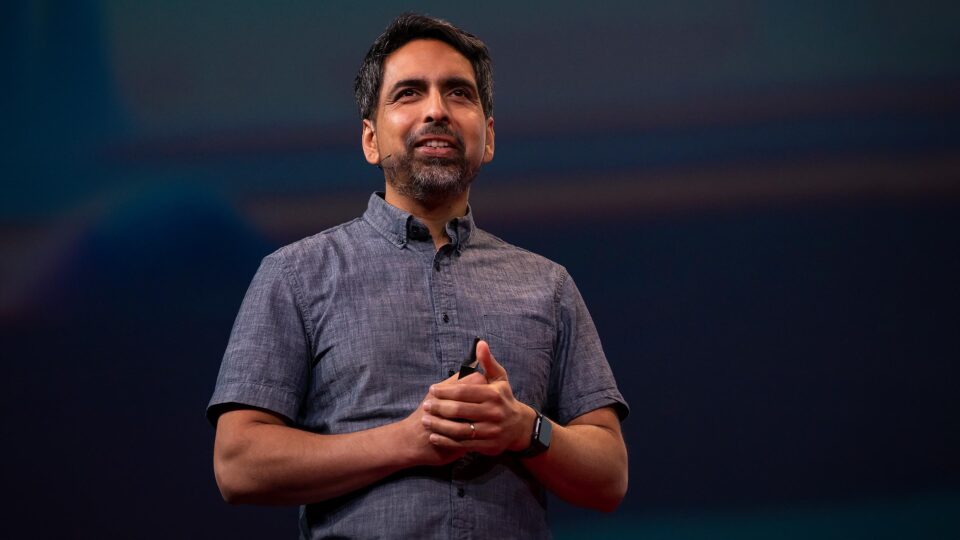
Salman Khan, founder and CEO of Khan Academy and a prominent voice on the future of artificial intelligence, is warning that the economic and social impact of AI may arrive faster — and hit harder — than many people expect.
In a recent interview with Fortune, Khan cautioned that even modest job losses in white-collar sectors could trigger widespread economic and psychological shock.
“If white-collar work were to shrink even 10%,” Khan told Fortune, “it’s going to feel like a depression.”
Khan’s concerns extend beyond unemployment statistics. He believes the disruption could also shake the identity of millions of professionals whose sense of self is tied to stable, high-paying careers.
“They’ve been making upper-middle-class, affluent salaries for the last 20 years,” Khan said. “Their identity is tied to this. And now, all of a sudden, you’re going to have this mass shift in the job market.”
While economists remain divided on how dramatically AI will reshape employment, emerging research suggests substantial change may be coming. A 2025 study by MIT projected that AI could replace nearly 12% of the U.S. workforce — almost triple the current rate of displacement.
Khan emphasized that AI’s impact will not be confined to traditional white-collar professions. Automation, he says, is already reshaping the gig economy.
Driverless vehicles — developed by companies such as Waymo and Tesla — are expanding across parts of the United States. Though adoption remains uneven, Khan believes autonomous driving will eventually become standard, potentially affecting more than one million rideshare drivers nationwide.
He also pointed to conversations with industry insiders as evidence that corporate leaders are preparing for significant workforce reductions.
“People behind closed doors are talking about pretty bold things these days,” he said. “I’ve heard people say you could do the same work with a quarter of the team.”
The broader economy has not yet shown signs of widespread job disruption. Recent federal data showed unemployment falling to 4.3%, better than many analysts expected.
Still, AI-related layoffs are already emerging. Roughly 55,000 job cuts were linked to AI adoption last year. Salesforce, for example, reduced its customer service workforce by about 4,000 positions after implementing AI tools. Other corporate leaders — including Amazon CEO Andy Jassy — have also signaled that further AI-driven job reductions may be ahead.
For Khan, these developments are early warning signals rather than isolated events.
“When three years [from now] the stuff is really hitting the fan, you can’t wait another year to even have something to start mitigating the problem,” he said.
To prepare for large-scale workforce disruption, Khan is advocating a sweeping national reskilling initiative.
In a recent New York Times op-ed, he proposed that major corporations dedicate 1% of personnel costs or profits to fund a national training collective designed to help displaced workers transition into new careers.
Current corporate training programs, he argues, are too narrow and job-specific to meet the scale of the coming shift.
“If you don’t figure out how the laid-off truck driver or delivery driver can become a radiology tech or a nurse’s aide or something,” Khan said, “we’re going to have a huge problem on our hands. I don’t see any other solution.”
Khan has long argued that artificial intelligence represents a transformational force comparable to the printing press or the internet — but unfolding much more rapidly. He believes AI’s ability to scale human-level assistance, automate complex tasks, and reshape entire industries means institutions may struggle to adapt in time.
His warning is not purely economic. The coming shift, he suggests, could redefine how people work, learn, and even understand their place in society.
Whether AI ultimately replaces millions of jobs or creates new forms of employment remains uncertain. But Khan’s message is clear: preparation must begin now.
Without proactive planning, he believes the transition could feel sudden — and deeply disruptive — for workers across the economy.
Cover photo credit: TED.
