


NRI PULSE STAFF REPORT
Washington, D.C., January 27, 2026: Allegations by U.S. Senator Ted Cruz that internal political divisions in Washington stalled trade negotiations with India are drawing renewed attention this week, as New Delhi finalized a sweeping free trade agreement with the European Union — a deal European leaders have described as the “mother of all” trade pacts.
In leaked audio recordings reported by multiple media outlets, Cruz said senior figures within the Trump administration, including Vice President JD Vance and trade adviser Peter Navarro, blocked efforts to advance a U.S.–India trade deal. Cruz, a long-time supporter of free trade, reportedly described himself as “battling” resistance from within the White House even as talks with India failed to gain momentum.
The comments have taken on added significance after India and the EU formally concluded negotiations on a comprehensive free trade agreement this week, ending nearly two decades of intermittent talks. The pact is expected to sharply reduce tariffs on a wide range of goods and services, expand market access on both sides, and create one of the world’s largest free-trade zones, covering nearly two billion consumers.
While the White House has not publicly responded to Cruz’s allegations, the contrast between stalled U.S. talks and Europe’s breakthrough with India has fueled debate over whether Washington’s internal policy battles are costing the United States economic ground at a critical moment in global trade.
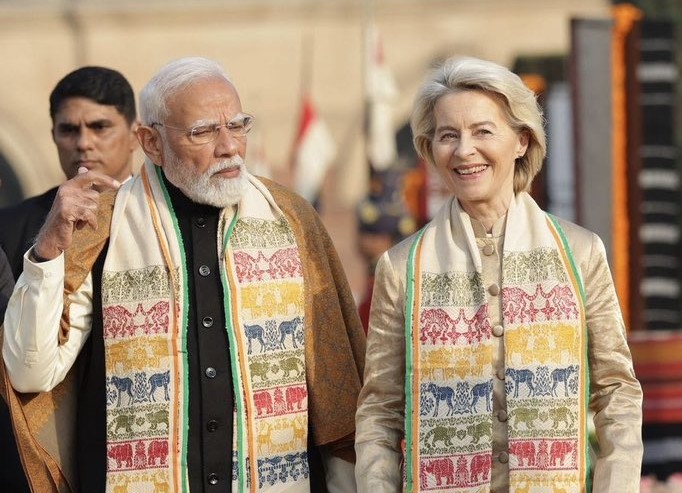
EU officials hailed the agreement as historic, with European Commission President Ursula von der Leyen calling it a strategic milestone that strengthens economic ties with one of the world’s fastest-growing major economies. Indian officials, meanwhile, framed the deal as evidence of India’s growing leverage as a global trading partner willing to move forward with countries prepared to close ambitious agreements.
Trade analysts note that while U.S. leaders routinely describe India as a key strategic partner and a counterweight to China, the absence of a formal trade agreement has long been a weak point in the relationship. Cruz’s remarks suggest that ideological divisions — particularly over tariffs and economic nationalism — may have played a decisive role in keeping talks from advancing.
While individual Indian-American business leaders have publicly criticised reports that U.S. Vice President JD Vance opposed efforts to advance a U.S.–India trade deal, major advocacy groups such as the US-India Business Council, Indiaspora, and Indian-American Chambers of Commerce have not yet issued formal statements in response to the leaked comments.
The India-EU agreement still requires legal review and ratification by the European Parliament, EU member states, and India’s cabinet before it takes effect, a process expected to extend into 2027. Even so, its conclusion points to a broader shift in global trade dynamics, with India increasingly diversifying its economic partnerships amid uncertainty over U.S. trade policy.
As Washington debates the merits of protectionism versus free trade, India’s deal with Europe offers a clear message: major economies unwilling or unable to move forward risk being left behind.
Cover photo credit: Ursula von der Leyen/X.
Europe and India are making history today.
— Ursula von der Leyen (@vonderleyen) January 27, 2026
We have concluded the mother of all deals.
We have created a free trade zone of two billion people, with both sides set to benefit.
This is only the beginning.
We will grow our strategic relationship to be even stronger. pic.twitter.com/C7L1kQQEtr
